
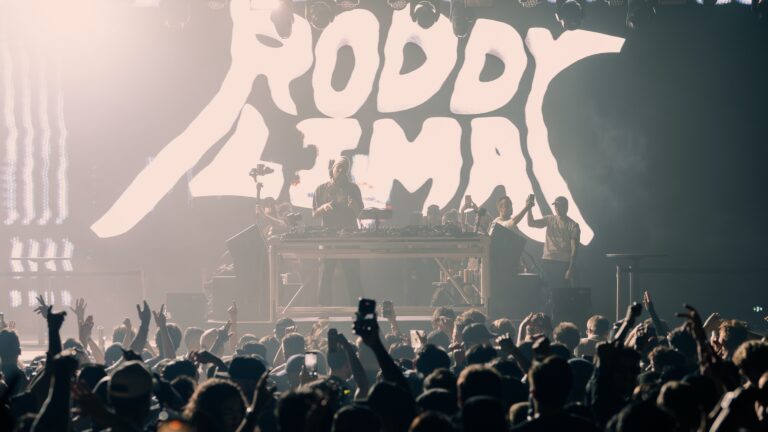
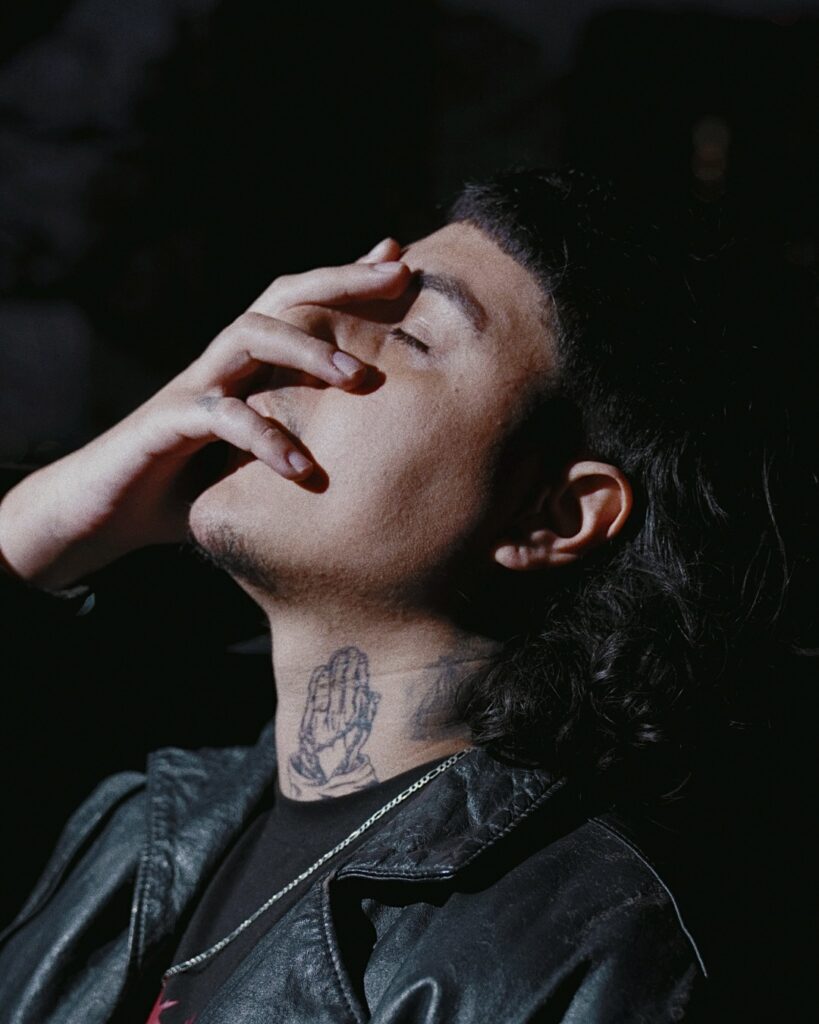
Roddy Lima is rapidly securing himself as one of the most exciting new exports in global dance music – and 2026 is already shaping up to be his biggest year yet. Hailing from São Paulo, the Brazilian DJ/producer has swiftly gone from an emerging name to an international force within the electronic-music circuit.
In remarkably short time – fueled by raw club instincts, magnetic live sets, and a sound that balances driving techno energy with groove-heavy, tech-house flair – Roddy Lima has already managed major releases on Drumcode, sold-out global tour dates, and a performance at the Do LaB stage at Coachella ’26.
Riding high through his recent successes, momentum hit a new highs with his single “Awake,” which arrived via Drumcode as part of DC4 Vol. 3. The track is a late-night weapon built for peak-hour pressure – it’s hypnotic, stripped-back, and pulsing with tightly controlled energy that locks into a rolling rhythm before erupting into a high-octane drop. It also marks Lima’s official debut on the renowned Drumcode imprint, founded and managed by globally acclaimed artist Adam Beyer.
Lima’s Drumcode milestone follows a strong start to the year, including “Lick It,” his collaboration with Sarah de Warren released through Insomniac Records. The single further cemented his reputation for delivering club-ready cuts that translate effortlessly from underground rooms to massive festival stages. With releases on imprints like Repopulate Mars, Experts Only, Black Book Records, and Truesoul, Roddy has already gained major Beatport traction and earned the attention of tastemakers including FISHER, John Summit, Anyma, and PAWSA.
On the touring front, his ascent has been just as rapid. Standout appearances at Miami’s Club Space and Hï Ibiza have proven his ability to command dance floors – and his 2026 schedule continues to expand with major dates across the U.S. and beyond. Most notably, Lima is gearing up for a highly anticipated debut at Coachella’s fan-favorite Do LaB stage this April – an essential stomping ground for electronic artists and one of the fest’s most celebrated dance-music stops.
DJ LIFE: Have you always been a fan of dance music?
Roddy Lima: I was lucky that when I was a teenager, the electronic-music scene in Brazil was just starting to take shape. Later on, artists like Alok and Vintage Culture really helped pave the way for people like me to be here today. I didn’t lock myself into one genre back then, and I still don’t. I like to experiment in the studio and see where the music naturally takes me.
DJ LIFE: Who were some of your earliest musical influences? How about who inspires you most now?
Lima: I really like Ricardo Villalobos. He helped shape and push the genre in a way that was ahead of its time, breaking away from traditional structures and exploring sound in a very raw, almost experimental way.
DJ LIFE: What were some of your earliest nightclub memories?
Lima: I used to go to a lot of raves with my friends. We would arrive right at the beginning and stay until the very end, being some of the last people to leave. We were underage at the time, and I still remember walking through the woods to get to the parties – that feeling is one of my strongest memories. It was very raw and exciting, and it really shaped my connection to that environment.
DJ LIFE: How about a standout memory from one of your very first DJ gigs?
Lima: Some of my first DJ experiences were at small parties that I organized with friends for people from our school. It was a very small crowd, but it meant a lot to me at the time. Those moments were my first real connection with music in a performative way, and they played an important role in getting me started on this path.
DJ LIFE: Did DJing or production come first for you?
Lima: Production actually came first for me. I didn’t have access to CDJs in the beginning, so I was already getting booked for shows before I had much hands-on experience DJing in a traditional setup. That really shaped my journey. My identity as an artist started in the studio. When I eventually got behind the decks, it felt like an extension of the music I was already creating, rather than the other way around.
DJ LIFE: What was the gear you first learned to DJ with? How about your DJ setup now?
Lima: These days, I play on a Pioneer DJ setup with four CDJ-3000s, a DJM-V10 mixer, and an RMX unit. But in the beginning, I actually learned how to DJ on a DDJ-WeGO controller. As I grew more confident and comfortable, I gradually expanded my set-up. It really evolved alongside me as an artist – the more I learned, the more I wanted to push myself creatively with a bigger setup.
DJ LIFE: Let’s dive into your studio. What’s your DAW? Are there any plug-ins or software you’d want to recommend to producers?
Lima: I primarily use FL Studio as my DAW. But honestly, I don’t believe there’s a “best” DAW or must-have plug-in. Any tool can get you there if you really understand it. For me, it’s less about chasing new gear and more about mastering what you already have. Any synth can sound incredible in the right hands. Once you push your tools to their full potential, that’s when you start developing your own sound.
DJ LIFE: Walk us through what a typical day in the studio is like for you…
Lima: Honestly, there’s no such thing as a “typical” studio day for me. Anywhere and anytime can turn into a session. Whenever an idea hits, I just start working on it, no matter where I am or what I’m doing. Making music feels very natural to me. Once I’m locked into an idea, time just disappears. I can forget to eat, drink – everything. I fully immerse myself in the process and just follow where the music takes me.
DJ LIFE: Your single “Awake” marks your debut on Drumcode. What did that moment feel like for you personally and creatively?
Lima: It was a recognition of the work I’ve put in over the years. I’ve been a fan of Adam Beyer for a long time and really respect Drumcode, so I focused on staying true to my sound while fitting into their world.
DJ LIFE: “Lick It” with Sarah de Warren showcased another side of your sound. How do collaborations change your creative process?
Lima: Working on “Lick It” with Sarah de Warren pushed me creatively in a different way. Collabs take you out of your bubble – you’re building something together and it becomes a conversation. Her vocals added a whole new emotional layer and really guided where the track went. It made me approach the production in a more dynamic, expressive way, something I love exploring.
DJ LIFE: Do you prefer to work with your collaborators in-person or virtually?
Lima: Producing is a very personal moment for me. Most of the time I’m alone, and I feel comfortable that way. Honestly, I hardly do collabs, and most of them have been remote. It works well because you can spend hours testing sounds and experimenting without anyone’s approval or being in a hurry.
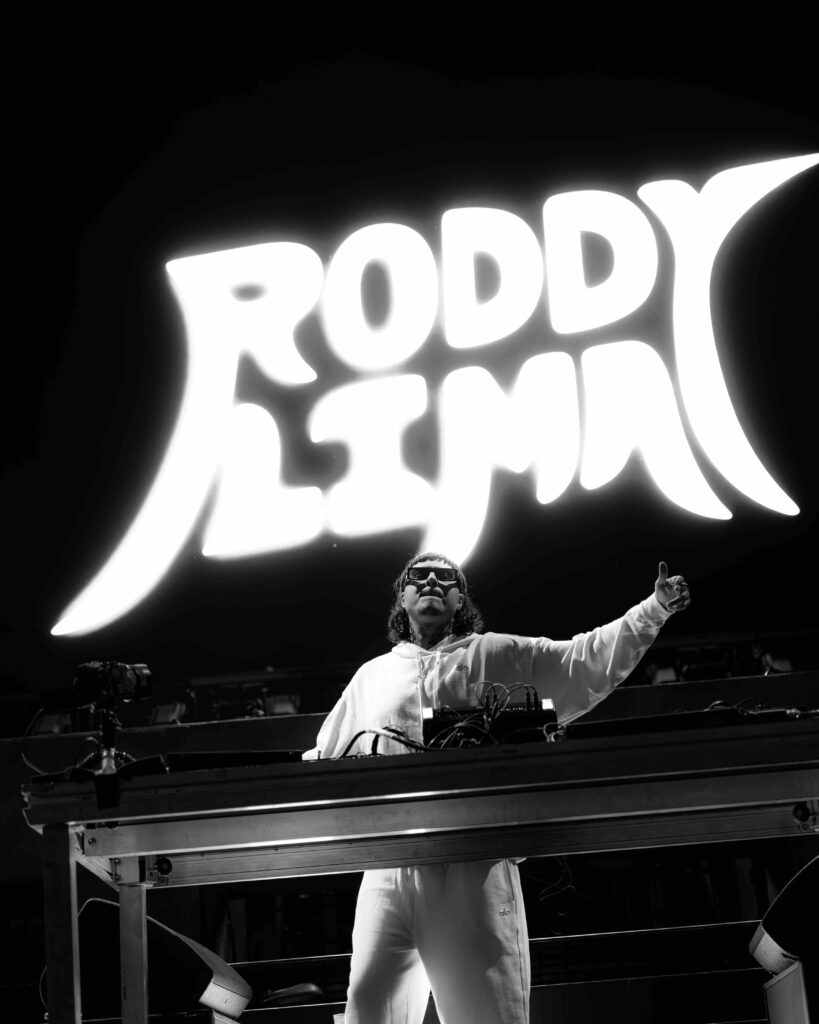
DJ LIFE: You’ll be playing at upcoming festivals like EDC Las Vegas, Coachella, and Breakaway. How do you go about preparing for sets?
Lima: Every set starts with understanding the space and the moment. Playing festivals like EDC Las Vegas, Coachella, and Breakaway Festival, the crowd energy is completely different from a club, so I prepare with that in mind. I’ll build a rough structure – how I want to open, where I want to take the energy, and a few key moments – but I never lock myself into a fixed set. Reading the crowd is everything.
DJ LIFE: Are there tracks you always like to include?
Lima: I usually go through a lot of unreleased music and edits, testing what feels right and what tells the story I want to create. There are definitely a few tracks I like to keep in my rotation, either my own or records that have a strong emotional or energetic connection, but I don’t believe in “must-play” tracks. Each set is its own experience, and I want it to feel unique for that specific crowd and moment.
DJ LIFE: Looking at your recent tour dates and upcoming gigs, you’ll be playing at nightclubs and music festivals. In what ways is your process different – beforehand or behind the decks – when playing a nightclub set vs. a festival set?
Lima: The approach is pretty different, both in preparation and in the moment. With festival sets, like the ones at EDC Las Vegas or Coachella, you’re working with a limited time slot and a massive, diverse crowd. So, I focus more on impact, strong openings, defined transitions, and moments that hit quickly. It’s about capturing attention fast and creating something memorable in a short window.
In a nightclub, it’s almost the opposite. You have more time to build a journey and go deeper musically. The crowd is usually there specifically for that sound, so I can take more risks, play longer blends, and explore subtler grooves. It becomes less about big moments and more about creating a flow that evolves naturally over hours.
Behind the decks, the biggest difference is how I read the room. At a festival, I’m constantly adjusting to a wide range of energy levels, while in a club, it’s more about locking into a shared frequency with the crowd and slowly shaping that connection throughout the night.
DJ LIFE: How do crowds differ across regions, and has that influenced how you DJ or produce?
Lima: Crowds definitely have their own personality, and I’ve become really aware of that over time. Some audiences are very expressive and energetic, while others focus deeply on the music, letting you build hypnotic layers. Others mix both, responding to energy and big moments. Experiencing this has made me more versatile as a DJ and producer, always thinking about how a track will connect in different environments.
DJ LIFE: How do you access your music career, as it stands now?
Lima: I don’t spend much time thinking about the future. I focus on living in the moment, working hard, and giving my best. I set personal goals for myself, but I keep them private, letting the journey unfold without expectations.