

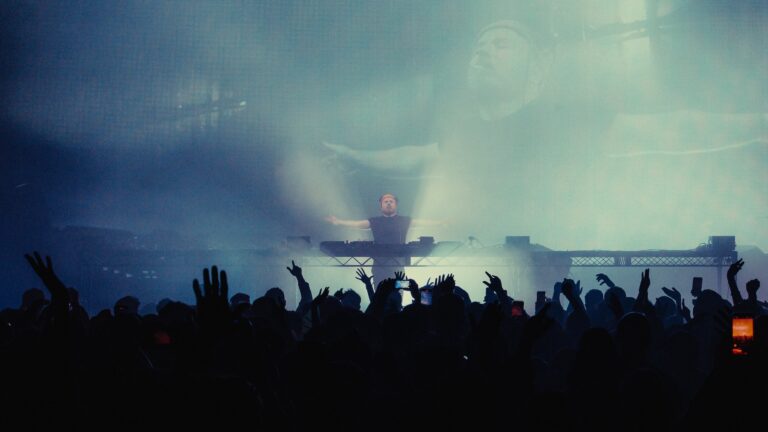
Ecstatic & glowing, Duke Dumont’s “Union” revisits his love for rave music. Read all about it in this DJ LIFE cover feature with the dance music mainstay.
With his respectable amount of club and radio smashes, you may be right to think of Duke Dumont as a global hitmaker. Indeed, a decade ago, a flurry of superb, housey club cuts – like “Need U (100%),” “I Got U,” “Won’t Look Back,” and “Ocean Drive” – found a larger audience and made him a much-in-demand DJ/producer.
But, if you talk to him these days, it seems that seeing his tunes climb the charts or stream big numbers isn’t what gets him up in the morning. And don’t even talk to him about playing the modern, music-industry game of algorithms to facilitate such things. He blithely dismisses that part of the job.
No, he’s an artist who’s simply interested in making great music and performing well for his fans – whether it’s a straight DJ gig or a big-production live show. If you want proof, check out Union, his latest full-length.
Unlike many albums from top EDM DJ/artists, Union (Astralwerks) is the furthest thing from a slapdash collection of singles. Instead, Union is much more conceptual in that it’s a beginning-to-end experience that harkens back to an earlier time in dance music, an era when the club ruled and one’s sensory experience was solely dependent on the dancefloor and the DJ’s music. No showboating, no unnecessary frills. Simple and perfect, the music and you and your friends on the dancefloor.
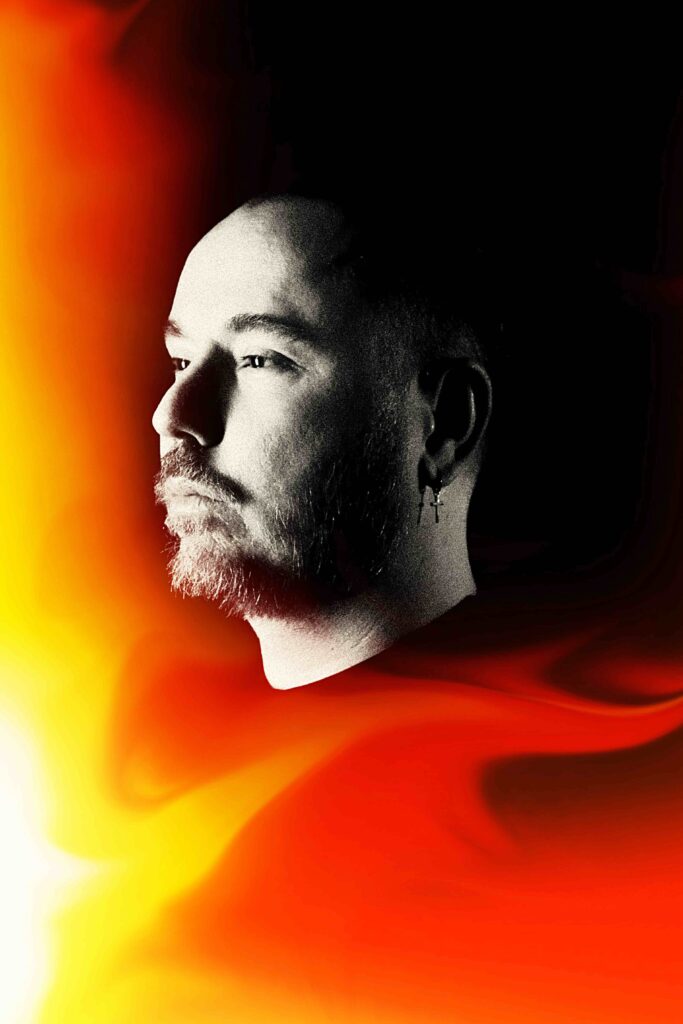
Dumont calls Union “a cohesive, emotive rave journey” and “a homage to this unique experience.” Going further, he says that “the entire essence of the album is channeled to create that feeling.” He succeeded.
An expedition full of dreamy hooks, nervy, pulsing rhythms, big synth swooshes, and powerful diva spotlights, Union captures that glowing, loved-up, early ’90s vibe with 32 minutes of bottled euphoria. Uplifting cuts like “The Chant” and “ENERGY” ascend and percolate, while other standouts like “Feels Like This” and the single “My Heart (Is Full of Love)” embody the rave ethos with glistening, you-are-there moments.
We recently caught up with Brit-born/L.A.-based Dumont, as he prepared an upcoming tour, which will include six North American dates in November and December.
DJ LIFE: Let’s get into the new album, Union. It’s quite a difference from Duality, your previous full-length. It’s more stripped-down, and it feels like a full-on, immersive club experience. What was your approach to Union, as opposed to Duality?
Duke Dumont: Union had more intent… the intent being a cohesive, emotive rave journey from start to end. I took the approach of making an album as a whole, and not on a song-by-song basis. Good for the soul, bad for the algorithm.
DJ LIFE: It has a very you-are-there vibe…
Dumont: I’ve come to realize there aren’t many things in life that bring people together on one level. Union is a homage to this unique experience. The entire essence of the album is channeled to create that feeling. Each song was made with the live experience in mind. Again, the album was made to be listened to in its entirety – from start to finish – and absorbed in a live-music environment. It was not made to appease playlists or radio. It’s intended to take the listener on a journey, not provide a quick fix.
DJ LIFE: On Union, you really seem to be revisiting breakbeats… tunes like “My Heart (Is Full of Love),” “Hit Em,” and “Ain’t Giving Up” really take me back to a time in clubland and the rave world when you heard that all the time. What was the impetus for tunes like those?
Dumont: Unconsciously, probably a homage to ’90s U.K. rave culture, especially on “My Heart.” There’s an honesty with nostalgia… Having lived overseas for 10 years, I wanted to make the album a uniquely British record… not because of patriotism, politics, etc., but because of homesickness and a love for rave music.
DJ LIFE: You have some really strong vocal collabs on Union, and very different ones. Talk a bit about “Feels Like This” with Tony Walsh, as opposed to the more soulful cuts like “Ain’t Giving Up” with Clementine Douglas. What went into those?
Dumont: The embryo of the idea and direction starts from my end. With Clementine, it was different from Tony. Clementine, I had a basic idea. She completely understood the objective, and we recorded in Los Angeles and London. Tony was different. I had sampled a previous poem he had written and performed, but we decided to go with an original piece instead. So, when I was in London, he caught a train from Manchester for the day, and we recorded.
DJ LIFE: Musically, what were your first influences?
Dumont: Late-1990s dance music. Seeing dance music on “Top Of The Pops,” a U.K. music show on television. Then, around 16, becoming more regionalized with U.K. Garage being massive in Northwest London. Then that migrated to deeper house music. Combine that with a game on the PlayStation called Music 2000, which was a music-creation game with sampling time, and that’s what made me catch the music-making bug.
DJ LIFE: What made you want to pursue music seriously?
Dumont: I was fired from a job, and luckily, I made a living from music within three months. I wouldn’t have had the security or confidence to pursue music full-time if that hadn’t happened.
DJ LIFE: You grew up in a dance-music culture in the U.K. that was and remains massive. Can you remember an artist or a couple of dance tracks that really caught your attention?
Dumont: The 0 A.D. moment for me was Daft Punk’s Alive 1997, live in Birmingham CD. Obviously, it’s not a dance track, but a live set of their album. That CD gave me a meaning for what I wanted to do… not necessarily copying the sonic, but making a collection of music to play in that way. I still hold that CD as the gold standard for dance music.
DJ LIFE: How much of a clubber were you when you were young? What are your memories?
Dumont: Honestly… hated it. From 16 to 18 years old, I only experienced carpeted nightclubs in Watford and Northwest London – 2-Step was at its height. Witnessing people being bottled and fights every night. In my early 20s, when I started going to events in Central London that changed a bit. The violence of an average night out didn’t exist. People look back at a certain era with rose-tinted glasses – in reality, it fucking sucked.
DJ LIFE: In the modern era, how do you see the differences between the European fans of dance music and those from North America?
Dumont: Europeans expect more musically, but less of a show. Americans expect more of a show, but less musically.
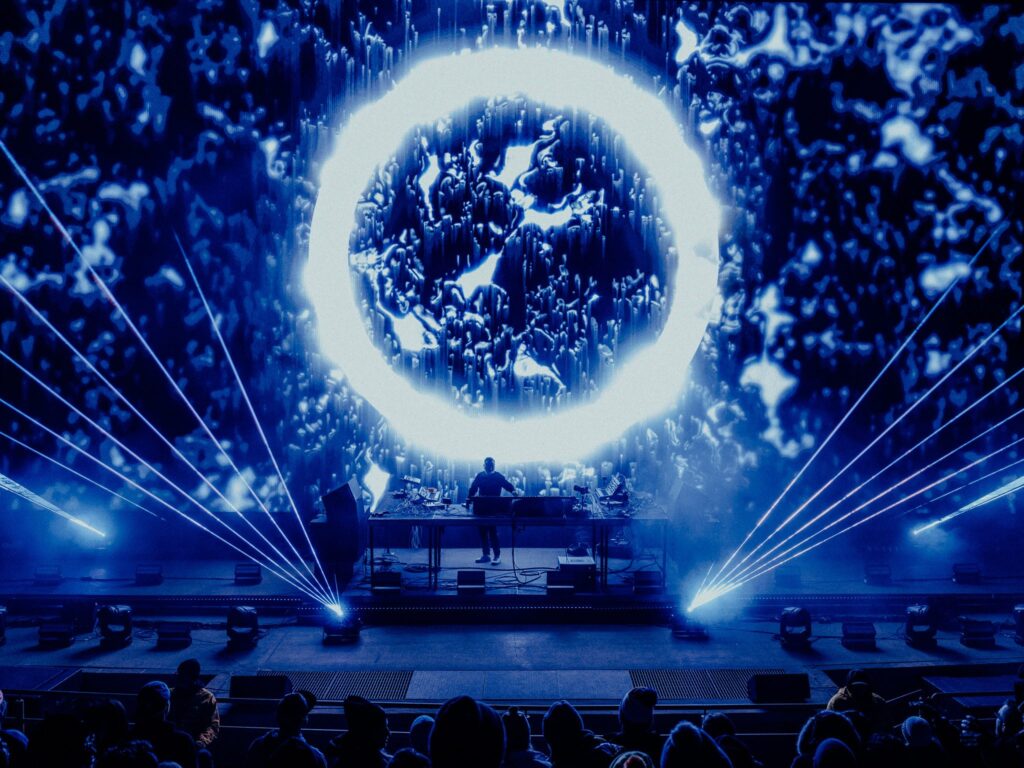
DJ LIFE: How did you move into DJing? Did you ever learn any traditional instruments?
Dumont: I play keyboards badly and learned to DJ on Soundlab belt-drive turntables. I did it all at the same time. Learning how a DAW worked is what gave me a career.
DJ LIFE: What would you say was your biggest break in the DJ game for you?
Dumont: Very early on, having an agent to get me $400 shows up and down the U.K. After that, when I couldn’t get any DJ bookings, having multiple No. 1 records around the world, etc.
DJ LIFE: What age were you when you begin to create music? Were you doing remixes or full-productions? What was your evolution there? In an old interview with us, you mentioned that you were trying to replicate ’90s R&B records…
Dumont: I started creating music when I was around 16-years old. Then my ability grew with the technology I could obtain. I started off by being commissioned for remixes. At a certain point, I retired from remixing. It’s a broken business, and a remixer gets a set fee, but nothing on the writing. Rarely benefits the remixer. Not sure if I said I’m trying to replicate ’90s records [Laughs.] Maybe I did? A lot can be learnt from vocal production from early ’00s R&B records, though.
DJ LIFE: Do you have any kind of process to the studio work? How do you maintain your focus and productivity?
Dumont: I try to find something to hinge a record around. If it gives me an emotive feeling within the first 30 minutes of making it, I try to develop it, hoping that others get that same feeling when they listen.
DJ LIFE: Your sounds have always struck me as something classic, as I mentioned, but always moving forward musically. I think the tunes (“Need U,” “Ocean Drive,” “I Got U,” etc.) that made the world notice you have really stood the test of time. How do you view those tunes now and what was it like for you to get known world-wide with Grammy nominations, big gigs, and global tours?
Dumont: The music side to me is still magic. The rest – as in, the business – not so much. I have an appreciation for fans and concert goers more than I ever realized. The magic is from creation to listener. Everything in the middle is dirty – contracts, negotiations, social media, streaming numbers, etc. Now I have a commitment to provide a level of show to concert goers, regardless of how much I make on the backend.
DJ LIFE: Will this coming tour be a “live” show or a straight-up DJ gig? What should fans expect and what kind of experience are you looking to provide?
Dumont: For this year, I’ll be DJing, but 2026 will be 2.0 of my live show.
DJ LIFE: In an old interview with DJ Times, you detailed your hearing issues and how you dealt with them at an early age. How is your hearing now, and does it affect your performances at all?
Dumont: I was born partially deaf. Surgery helped correct it. My hearing right now in my left ear isn’t good because of the damage from DJing, but I have a couple of years left of being able to make music.
DJ LIFE: These days… from your main studio gear, what’s your DAW? Monitors? Fave plug-in?
Dumont: Ableton Live. Adam monitors, and a lot of software. Favorite plug-in is probably u-he DIVA synth.
DJ LIFE: Are there DJ/producers that you admire?
Dumont: I don’t think I put anyone on a pedestal anymore. I’ve been doing this too long. But there are a lot of acts I have a huge amount of respect for… whether old or new.
DJ LIFE: In the DJ booth, what gear do you use and why?
Dumont: Standard Pioneer CDJs and DJM. I don’t have recordbox or Sync. It’s not because I’m auto it. It’s because I’m too lazy to learn. But I also don’t like the way sync makes records sound. It ruins anything more house sounding. But on grid, tech-house stuff, it handles well.
DJ LIFE: Are you using the newer DJ technologies like stems?
Dumont: For DJing, no. For production, I embrace new technology more so.
DJ LIFE: How has your approach to the DJ craft evolved over the years in both clubs and festivals?
Dumont: Understanding the expectations of the environment you play in is key. Festivals are competitive in nature, with each act trying to outperform the others. Clubs ought to be about the night as a whole, from start to end.
DJ LIFE: What are three tracks that are always in your DJ box?
Dumont: Outside of my records, I’d say: “Bring It On Down” by Ramon Tapia: the Ejeca Remix of “Ministry of Love” by Romanthony; and “Feelin’” by Ivory.
DJ LIFE: What have been your most memorable gigs so far?
Dumont: Creamfields, 2025, The Slam Tent at T In The Park circa 2012-2014, and Sony Red Studios LA.
DJ LIFE: Where are your favorite places to play?
Dumont: When I started, it was Fabric in London. It’s where I learnt to DJ. Venues? I’m not too sure, but for cities it’s Dublin, Manchester, and Melbourne. I’m starting to take on more gigs in places I want to visit, such as Tokyo.
DJ LIFE: What motivates you to create music and play shows?
Dumont: I don’t have a motivation, to be honest. Motivation and passion are different. Motivation allures to ambition. I have a passion for music making, and a respect for the audience to provide a good experience.
DJ LIFE: After this album and tour, what’s next from Duke Dumont?
Dumont: My third album and my live show 2.0 – both in in 2026.
Images Courtesy of Duke Dumont