By launching The DJ Museum in Las Vegas, slammin’ Sam Maxion has preserved the culture & achieved a dream.
Las Vegas – In recent times, Las Vegas has emerged as one of the main beacons of U.S. DJ culture. At Sin City venues big and small – whether it’s a casino-run superclub or a glitzy lounge – the DJ booth remains the center of attention, and millions flock into town each year to let loose.
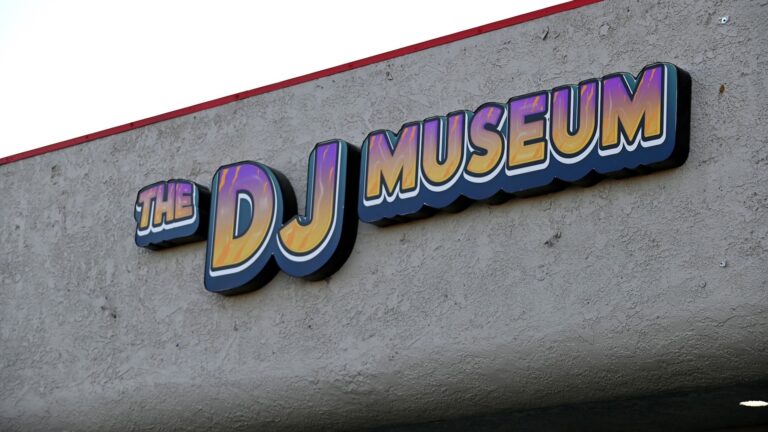
So it should be no surprise that, in a town of many museums – The Mob Museum, The Punk Rock Museum, etc. – The DJ Museum has opened. And as founder Slammin’ Sam Maxion says, “It’s about time.”
Opening this past October in Vegas’ Filipino Town section, the museum showcases the history of DJing from the 1950s to the present with vintage gear, vinyl, and special memorabilia related influential DJs past and current. [Full Disclosure: DJ LIFE/DJ Times magazines and the DJX/DJ Expo tradeshows have their own display.]
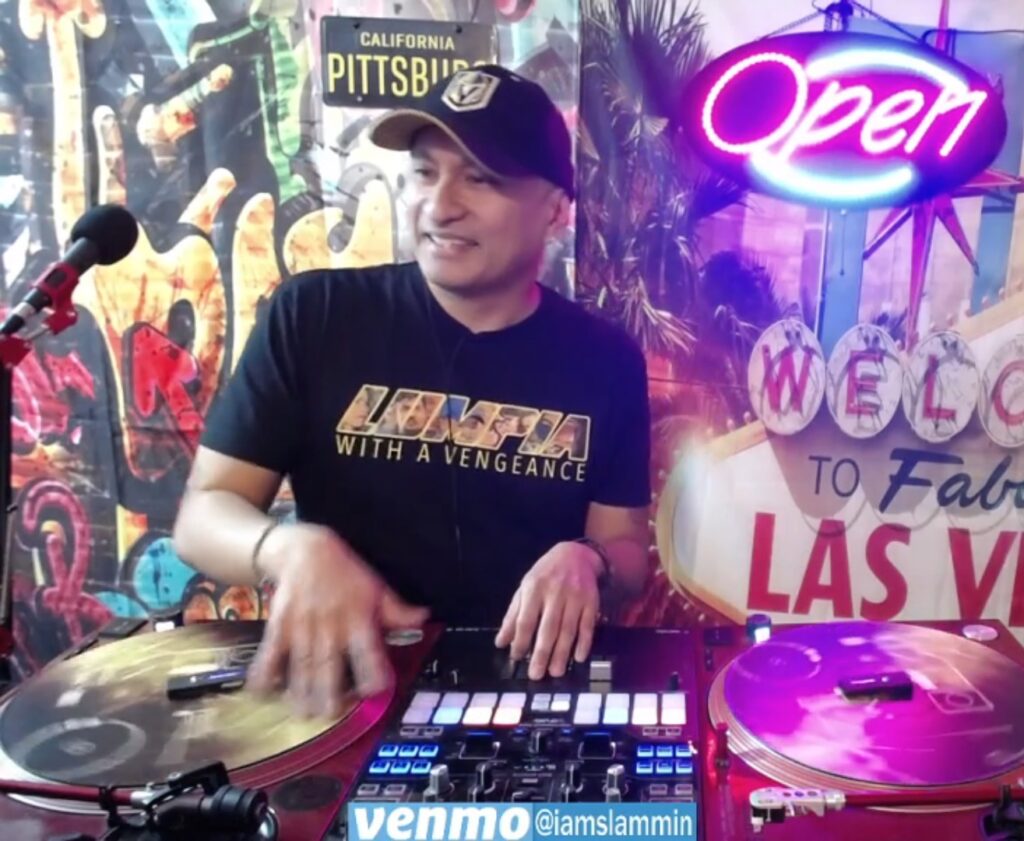
For Maxion, a longtime DJ himself, it’s a passion project that he hopes to see evolve with the ever-changing DJ scene. So, we recently connected with Maxion, 55, to discuss his history and his new venue that celebrates the history of DJing.
DJ LIFE: How long have you lived in Las Vegas? Vegas has really become a DJ-centric town, but it wasn’t always like that, especially in the ’90s. Now, aside from the bigger properties, there seems to be plenty of places for a DJ to play – what’s it like for a DJ in Vegas these days?
Maxion: I’ve been here since 2019, so about six years. Vegas has expanded so much that you can’t go anywhere without some DJ playing at a lounge, restaurant or street corner. If you hustle enough, you’ll find work pretty much anywhere.
DJ LIFE: What gave you the idea to do a museum? And why Las Vegas?
Maxion: It was about time. There is a museum for everything nowadays. What better place than Vegas? Truly, it was about due for a specific museum for DJs. On the East Coast, there is The Hip Hop Museum, which caters to the entire culture – B-Boy, graffiti, rap, and, of course, DJing. My DJ Museum goal is to preserve the entire DJ culture, share the origins of how it developed throughout the years, and where it’s going into the future.
DJ LIFE: Where did you grow up and what got you first interested in music?
Sam Maxion: I was born and raised in the city of Pittsburg, Calif. My parents always had some Filipino music playing in the household. My first record was “Give Me the Night” by George Benson on 7-inch vinyl.
DJ LIFE: Do you play a traditional instrument?
Maxion: I played piano for about two years.
DJ LIFE: What got you into DJing? What was the attraction?
Maxion: I remember meeting a wedding DJ when I was around 11-years old and was just taken aback by the way he was cleaning his 7-inch records. I felt that was just so cool [laughs]. From there, I started learning the basics.
DJ LIFE: Were you influenced by any DJs you saw?
Maxion: Yes, several, like Grandmaster Flash, Jam Master Jay, and others early on.
DJ LIFE: Did you have a mentor in the DJ game?
Maxion: Yes, growing up and starting out, I had one mentor – his name was Joseph Borja from the Fuse Mobile DJ Group. He was very instrumental in many facets of DJing – mixing, scratching, etc. Also, I was just learning from local DJs here and there, and creating my own style.
DJ LIFE: What was the DJ scene like in your area where you grew up? What kind of music was popular?
Maxion: I would say the scene was very active. There were so many DJ battles and showcases, plus bedroom DJs putting in work. Back then, I would say freestyle and hip hop were the most popular music genres.
DJ LIFE: How did you get started spinning? How much practice did you need before you got gigs?
Maxion: When I got two mis-matched turntables with pitch control, that is when it started. I practiced for hours, working on my song selection, beat-matching, scratching and concepts.
DJ LIFE: Do you remember what gear comprised your first DJ set-up?
Maxion: Yes, both turntables were belt-driven – one was a Fisher and other was a lower-end Technics. Plus, I had a basic Realistic mixer from Radio Shack.
DJ LIFE: What were your first public performances?
Maxion: I remember my first real public gig was at a junior-high dance. It was horrible. I was nervous. However, the more gigs I did, the better I got. Thus, things were getting better gradually.
DJ LIFE: DJs always have those experiences that end up making them stronger.
Maxion: Absolutely. Once, I was selected as a finalist for a DJ competition. I beat out over 1,000 DJs to place, only
to lose due to inexperience and folding under pressure. Yes, it was a learning experience. But eventually, I’ve played in arena stadiums and live venues throughout the world and been involved with charitable events, as well.
DJ LIFE: Explain what Slammin’ Entertainment entails.
Maxion: Slammin’ Entertainment is my company that brands my record label and DJ, remixing and production efforts.
DJ LIFE: Tell me about your radio career – where did you work and what have you done?
Maxion: Broke through in the early ’90s with the San Francisco station Wild-107. They gave me the break to have my own mix-show slots and develop the brand I have today. I also worked as mix-show coordinator at KSFM 1025 Sacramento for a few years.
DJ LIFE: And as for events, over the years, how have they been balanced? You still do club and mobiles, right?
Maxion: Yes, both. I would say I DJed equally both throughout the years.
DJ LIFE: When it comes to mobiles, what kinds of events are you doing? How do you get your name out there?
Maxion: I do a lot of corporate events in connection with The DJ Museum – from convention events, business mixers and so on. The DJ Museum brand is starting to take shape to help get the word out.
DJ LIFE: What clubs or lounges are you playing in Vegas these days?
Maxion: Mainly clubs/lounges in the Las Vegas area, plus the events at The DJ Museum. I play at the ETA Lounge in Aliante Casino, CASBAR Bar Lounge in the Sahara, Eyecandy Bar & Lounge in Mandalay Bay, and Centre Bar/Lounge at Luxor.
DJ LIFE: What’s your current DJ set-up?
Maxion: I love my Pioneer DJ DJM-S11 and two PLX-1000 turntables with Serato DJ Pro and a Phase DJ wireless controller. It’s so smooth and sounds great. Love the effects.
DJ LIFE: What are three songs that you always have ready to play?
Maxion: OK… “Push It” by Salt-N-Pepa. RIP Cameron Paul – his remix still stands out and will always be a go-to. “California Love” by 2Pac and Dr. Dre. It’s an instant-reaction song to get everyone going. And “Low” by Flo Rida and T-Pain. It just works with any moment of the party.
DJ LIFE: Can you give me three DJs that you most admire and respect, and tell me why?
Maxion: Cameron Paul – he was a Bay Area legend, ’nuff said. DJ Qbert – he’s a turntablist king. DJ AM – his mash-up blends and timely scratches always impressed.
DJ LIFE: In your mind, what makes a good DJ? What impresses you?
Maxion: Solid song selections, transitions, and crowd control.
DJ LIFE: The DJ Museum is located in Las Vegas’ Filipino Town. Why do you think the West Coast Filipino community has given so much to the DJ scene? So many notable jocks come from that background – why did DJing take off within that culture?
Maxion: It’s true. Filipinos by default have a love for music, whether its singing, playing an instrument, etc. I feel DJing was an alignment of all cool facets of expression, as well as timing. Especially because of the cold weather in the San Francisco Bay Area, it forces kids to stay indoors. Thus, DJing was a main option to keep busy. Having it in Filipino Town is just a bonus.
DJ LIFE: What do you have inside the museum that’s unique, something visiting DJs will enjoy?
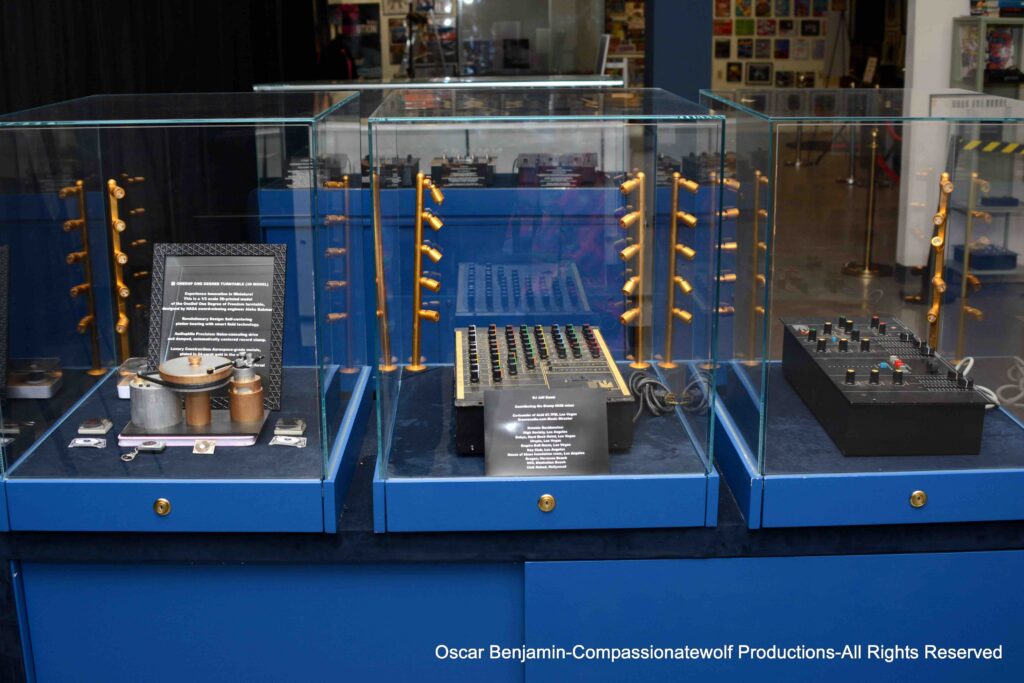
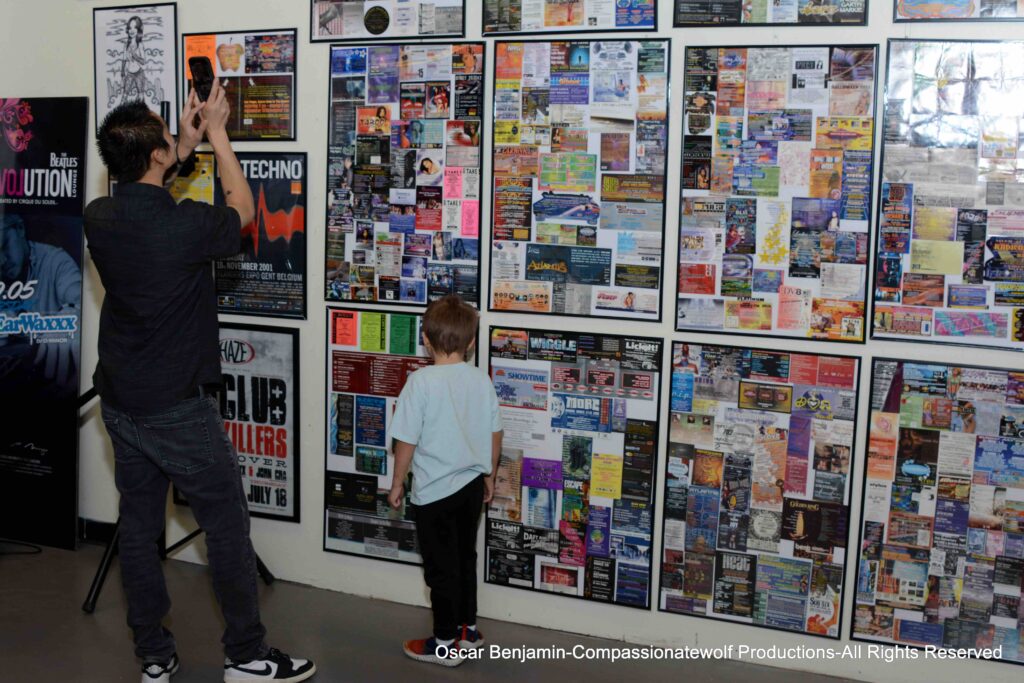
Maxion: The DJ Museum has several exclusive sets of memorabilia, including rare turntables, mixers not found anywhere. For example, we’ve got a Meteor Clubman One-One mixer – from U.K.’s DJ Fonze. We have custom wooden mixers by DJ Qbert, and many more. Our exhibit has dozens of exclusive displays from the top DJs in the world including Cameron Paul, Jazzy Jeff and, of course, DJ Qbert. The DJ Museum has actual artifacts and memorabilia from people’s their favorite DJs and the great DJs that they never knew existed. The other artifacts from the DJs could be anything from their battle mixers used to win championships, to trophies, to signed rare photos, etc. We also have DJ-friendly interactive gaming area for kids to enjoy.
DJ LIFE: How do you expect it to evolve? What’s set up in the future?
Maxion: The museum is constantly curating and accepting artifacts and memorabilia from DJs throughout the world. It will always have new stuff for everyone to enjoy. My goal is to keep the fresh every four to eight months with new stuff that keep them coming back to check out.
DJ LIFE: Are you surprised that the DJ scene in America has evolved to the point that it now has its own museum?
Maxion: Doesn’t surprise me. Just like anything, if it has emotional impact on your way of life, it’ll have staying power. Let’s have a place to celebrate its origins, so the new generation can see how it got started.