

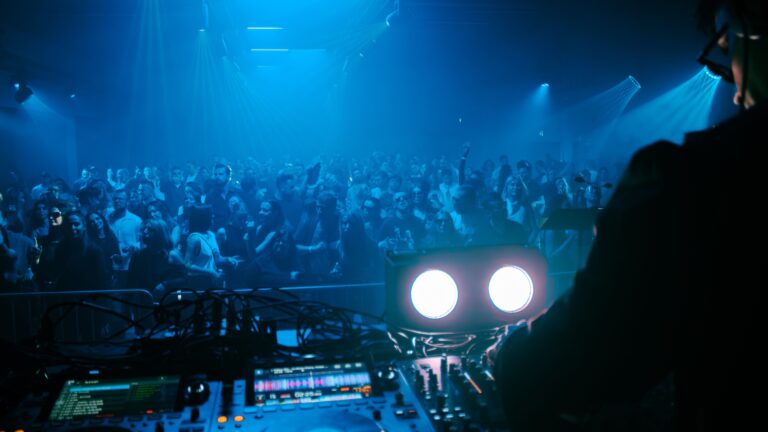
As a DJ, I’ve performed for thousands of people. I’ve also played for 10. And if there’s one thing I’ve learned over more than two decades behind the decks, it’s that the size of the crowd shouldn’t determine the effort and attention you bring.
Sometimes the room is packed, the energy is incredible, and everything you play seems to work. Other nights, you’re staring at an empty dance floor, wondering where everybody went and whether anyone is listening. On the drive home, you wonder if your career is over and you’re washed up.
I’ve experienced the good and the bad more times than I can count. Those dull nights haven’t gotten any easier to process. But along the way, I’ve developed a philosophy and an operating framework that I hold myself to every time I perform. I call it: No Bad Sets.
I don’t mean every set will be perfect. It won’t. We’ll make mistakes, misread crowds, play records that don’t work, and walk away wishing we’d done something differently.
What I mean is that every time I step behind the decks, I bring it like it’s my last show ever. If I want to keep doing this, I need to earn the next opportunity. Not next week. Not at the next show. Now. I need to do everything I can to help generate revenue and create an unforgettable vibe people want more of, every single time.
That has as much to do with mindset, preparation, attitude, and how I treat people as it does with the music. There’s a difference between being a good DJ, being a professional DJ, and being someone a venue genuinely values having in its building – an entertainer the patrons can’t get enough of.
10 People or 1,000
Imagine you’re booked to perform for a thousand people. You’ve prepared your music, planned your opening, thought through transitions, and maybe practiced the routine 50 times. You’re determined to deliver something memorable with a hyperfocus on making no mistakes.
Now imagine you arrive and there are 10 people in the room. What changes?
Your programming might. Your energy might. But should the quality of your performance change? Should you throw on a playlist or prerecorded mix until more people arrive? I don’t think so.
Those 10 people don’t know what you expected. They only know what they’re experiencing. Maybe they bought tickets, hired a babysitter, drove an hour, or convinced friends to come out. Maybe it’s their first night out in months. They chose to show up, and we owe them our best in that moment.
Why should their experience be worth less because 990 other people didn’t show up?
I’m not suggesting you deliver a peak-hour festival set to 10 people standing around a bar. That would be a failure to read the room. But your technical execution, creativity, attention to detail, and commitment to their experience should be as close as possible to what you’d deliver for 1,000.
If the night is a bust, let the room influence what you play and how you play it. Redesign your vision around the people who actually showed up.
Performing for 10 can require more discipline than performing for 1,000. A screaming crowd supplies motivation. A quiet room forces you to find it yourself – or even create it from thin air.
Your Standards Can’t Depend on the Crowd
Packed room? We’re excited. Great sound system? We’re locked-in. Big-name promoter? We’re on our best behavior.
Half-empty venue on a Thursday? Suddenly we’re checking our phones, playing whatever comes to mind, and counting down until we can leave.
I’ve fallen into that temptation myself. But if the quality of my work depends on how exciting the opportunity is, I don’t have a performance standard. I have a reaction to my circumstances. There’s a difference.
For me, No Bad Sets starts before I arrive. Do I understand the event and what I’m there to accomplish? Do I have the music and flexibility to respond when the night changes? Do I know what the person hiring me needs?
I can’t control ticket sales, the weather, or the crowd’s mood. I can control how prepared I am, how engaged I remain, and what I do when the plan falls apart. Those standards matter most when the night gets difficult.
Everyone in the Building Matters
You can play an incredible set to a packed dance floor and still be someone a venue never wants to work with again.
Maybe you’re difficult with the sound engineer, dismissive toward the bartender, or treat security like they’re beneath you. Maybe you act like the manager is interrupting your artistic masterpiece by asking a question.
Congratulations. You played a great set. But did you actually do a great job?
I believe every person working in that building deserves to be treated as though they’re the one signing my check. The bartender. The barback. The door person. Security. The sound engineer. The person cleaning up afterward.
Each contributes to the experience. Each sees something I might miss from behind the decks. Bartenders know whether people are staying and spending money. Security knows when the energy is becoming a problem. Management understands the business goals.
Why wouldn’t I want those people on my team? More importantly, why wouldn’t I want to be on theirs?
And that respect extends to every patron, whether they’re dancing up front or sitting at the bar with no intention of approaching the dancefloor. They don’t have to dance to matter. They don’t have to know my name to deserve attention. They certainly don’t have to be a VIP to deserve respect.
That doesn’t mean every request gets played. It means I can listen and treat people like their experience matters. Because it does.
Be An Asset, Not Just Entertainment
Last month, I wrote about understanding your job before deciding what to play. This is the natural extension of that idea.
When a nightclub hires me, they’re not simply buying four hours of music. They’re trusting me to contribute to the experience they’re selling. That affects whether customers stay, spend money, enjoy themselves, and return.
I’m not responsible for every aspect of profitability. But I am part of the business, not just a performer occupying space inside it.
Sometimes being valuable means creating an unforgettable dancefloor. Sometimes it means changing direction, communicating with management, or supporting another performer. Sometimes it means putting your ego aside.
There will be nights when what I want to play isn’t what the room needs. Being a professional doesn’t mean abandoning my identity or becoming a human jukebox. It means recognizing that my talent has to serve a purpose beyond my own satisfaction.
A Standard You Can Actually Operate By
No Bad Sets can’t just be something I say before a performance. It has to be how I operate. I use three checkpoints:
Before: Do I understand why I’m here, who I’m performing for, and what success looks like? Am I prepared to deliver it?
During: Am I engaged and paying attention? Are my decisions intentional, or am I going through the motions? Am I helping the staff and patrons have an unforgettable experience, or just another Saturday night lost in the archives?
After: Did I give the best performance I reasonably could? Were people glad they worked with me? Were patrons glad they came out? What could I improve?
Simple questions. Not always easy answers. It’s tempting to blame poor promotion, terrible equipment, or a difficult crowd. Sometimes those things really are the problem. But even when the circumstances aren’t my fault, my response is still my responsibility.
I can leave a poorly attended event proud of my performance. I can also leave a packed nightclub knowing the crowd had fun while admitting I wasn’t prepared or focused enough. The outcome and the standard aren’t always the same thing.
Earn the Next Opportunity
After more than two decades, I’ve learned that you never know where the next opportunity will come from. It might be a promoter, bartender, sound engineer, fellow DJ, or someone in the crowd.
But I don’t treat people well because they might do something for me later. I do it because that’s part of being a professional, and we’re all part of the customer experience.
And I don’t give 10 people my best effort because one might secretly be a festival promoter. I give them my best because they’re the 10 people who showed up.
The people who walk through the door and spend their hard-earned money hanging out with us are the reason I’ve been able to do what I love for more than 20 years. I don’t just owe them my best effort; I owe them everything I have. Nothing left on the table.
No Bad Sets doesn’t mean every night will be a success. It means refusing to use circumstances as an excuse to lower my expectations of myself and half-ass my performance. Whether it’s 10 people or 1,000. Sold-out Saturday or slow Friday. Headlining or supporting.
The Circumstances Will Change. My Standards Do Not.
If I accept a booking and occupy the time and space that could have gone to another DJ, then I better make sure my presence matters, that I give it my all, and that I demonstrate I was the right choice for that bill.
At the end of the night, I don’t want to measure my performance only by how many people danced or how loudly they cheered. I want to know I gave that room the best version of what I had to offer and made the experience better for everyone involved.
When I do that consistently, every set seems better than the last, and I know I’m making an impact on the business and the customer experience.
That’s what the No Bad Sets framework means to me. And if you’re reading this, I hope some of it proves useful.
Just Chris (aka Chris Sweet) is a Fairport, N.Y.-based DJ. Spinning for over two decades, he’s played nightclub residencies, casinos, and festivals across the U.S. and Caribbean. In 2026, he won the “Northeast DJ of the Year” competition and he joined the DJX education program as a panelist. Through this monthly column, The Modern DJ, he explores the changing role of DJs and the realities of building a career behind – and beyond – the decks.