

On Christian Karlsson’s Latest Galantis Project, Everything Old Is New Again
It’s been more than two decades since Swedish DJ/producer/songwriter Christian “Bloodshy” Karlsson began operating at the core of electronic/dance and pop music.
Before the explosive rise of his Galantis project, Karlsson left an indelible mark on 2000’s pop culture as half of the production duo Bloodshy & Avant, alongside Pontus Winnberg. Together they sculpted career-defining records, including their Grammy–winning smash “Toxic” for Britney Spears – which earned Best Dance Recording honors – alongside chart favorites like Spears’ “Piece of Me,” well as high-profile work for Madonna and Katy Perry.
Looking to escape the rigid formulas of major-label pop sessions, Karlsson pivoted to uninhibited artistic freedom by co-founding the indie-dance trio Miike Snow with Winnberg and Andrew Wyatt. This is where he had the chance to take hook-heavy pop and mix it with an eccentric edge, scoring platinum hits with “Animal” and “Genghis Khan.” As he began to play Miike Snow DJ sets at afterparties, he reconnected to the raw dancefloor culture that ultimately birthed Galantis.
Over the course of four full-length studio albums – Pharmacy (2015), The Aviary (2017), Church (2020), and Rx (2024) – Galantis evolved into a global titan. Earning multiple Grammy noms under his own moniker, Karlsson built a sonic universe celebrated for its euphoric hooks and explosive energy, racking up more than 11 billion worldwide streams and 5 billion video views across hits like “Peanut Butter Jelly,” “Heartbreak Anthem,” and “Love on Me.” Additionally, decade-old bangers “Runaway (U & I)” and “No Money” have crossed into Spotify’s prestigious Billions Club, flanked by celebrated collaborations with the likes of powerhouses such as Dolly Parton, David Guetta, OneRepublic, and 5 Seconds of Summer.
Now stepping away from the major-label ecosystem and inaugurating a new chapter with Ninja Tune imprint Counter Records, Karlsson is embracing creative liberation with The Devil’s Tax Return. Conceived as a distinct artistic branching out under the Galantis banner, the project sees him tackling an itch he long avoided: taking apart sacred, beloved songs from outside his catalog and rebuilding them entirely from the ground up. The biggest difference? Rather than relying on simple club edits or recycled master stems, he recreates every element with fresh instrumentation and original vocals to honor the original projects.
On The Devil’s Tax Return: Vol. 1, Karlsson zeroes in on the indie and alternative touchstones from the late 2000s and 2010s that soundtracked his earliest days launching Miike Snow. The EP opens with a vibrant, synth-driven reimagining of José González’s “Stay Alive” (penned by Ryan Adams), turning an introspective ballad into a soaring, hopeful dance anthem. The tracklist explores fearless stylistic range, flipping Feist’s iconic “1234” into driving synth-pop, channeling garage energy on The Killers’ “When You Were Young,” diving into U.K. funk via Kyla’s “Do You Mind,” and morphing The War on Drugs’ “Red Eyes” into a sweeping liquid drum-n-bass record, alongside an explosive take on Frankie Valli’s “Can’t Take My Eyes Off You.”
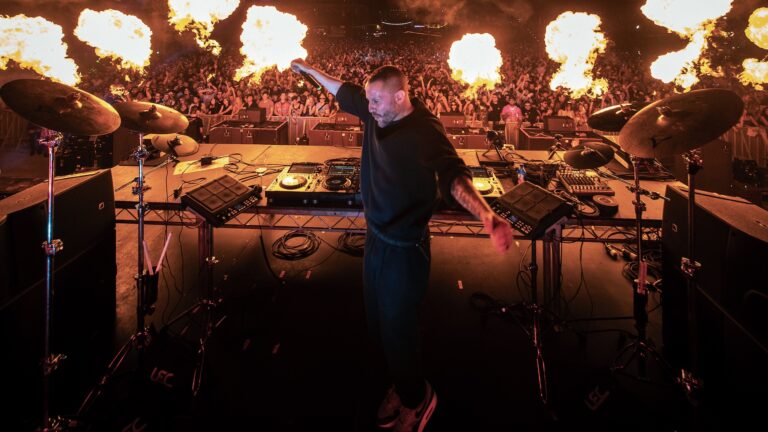
On the live side, there’s a sense of organic connection that fuels Karlsson’s rapidly growing Midsommar brand events, an immersive live concept rooted in the traditional Swedish holiday celebrating life, light, and friendship. Having expanded from its original home at the Brooklyn Mirage to open-air venues like Red Rocks Amphitheatre, The Midway in San Francisco, The Salt Shed in Chicago, and The Rooftop at Pier 17 in New York, Midsommar has become a floral-draped community phenomenon designed purely for the joy of the gathering.
These aren’t the only shows that Galantis is throwing these days either. In fact, Karlsson has spent most of the year on the road – and he won’t be slowing down anytime soon. Between testing unreleased VIP edits in his live sets, putting the finishing touches on a brand-new Miike Snow record, and preparing the rollout for The Devil’s Tax Return, Karlsson remains as energized and excited for what’s to come as ever – if not more than ever before. We recently caught up with him to discuss his latest projects.
DJ LIFE: How did you get started in the music world?
Christian Karlsson: I came from being a writer and producer for other people for a very long time. I came from being in bands, first punk rock and skateboarding culture. Then, remember when that culture clashed with hip-hop culture with House of Pain and everything? I became a rapper. I got signed as a rapper, did three albums, toured, opened for The Fugees, and all of that stuff. That got me into the industry, and I got to work with some big names. Remixing Jay-Z’s “Hard Knock Life” was one of the first really big gigs. Then I got into writing and producing for other people in pop music – Britney and all that stuff – for many years.
DJ LIFE: So how did that change things for you?
Karlsson: I always felt like I didn’t fit in that because every time someone wanted a song out of me for a specific project, I always missed the mark completely. I couldn’t be steered into doing something where it’s like, “We need this.” Most of the time, the big songs that I got on other big artists were always written for another artist. I wrote “Toxic” for Kylie Minogue, and it ended up on Britney. That just kept on following me.
So I started Miike Snow and closed the door on working for other people because I felt everyone always wanted me to do something, and that’s not how I create my best music. I couldn’t be in a box being like, “We need this,” or “Not this.” I closed the door and didn’t know if Miike Snow would get anywhere, but this is what I wanted to do.
DJ LIFE: Seems like a good move there…
Karlsson: Miike Snow had really big success from the first single, “Animal,” and we started to tour heavily. I started to DJ the afterparties as Miike Snow DJ sets. At the exact same time, some close friends of mine – Steve Angello and Sebastian Ingrosso in their early days – always took me in when they were playing shows in Ibiza or wherever. I showed them my first ideas for Miike Snow, and they remixed them, and that got me into that space. DJing the afterparties made me realize I needed to call it something else, because it slowly wasn’t sounding like Miike Snow at all anymore. That’s when I decided to start Galantis and have that as me doing it when it’s more dance than Miike Snow was.
DJ LIFE: What gear were you working on then?
Karlsson: It was CDJs, but an older generation of CDJs before all the sync buttons and stuff, actually burning CDs all the time. I always buy all the CDJs that come out and the mixers because I want to have at home the same generation that’s in the clubs. I keep on giving them to my brother when I have to switch. I was at his house the other day, and there were a lot of burned CDs that were in the CDJs that I haven’t listened to since. This was like 2009. It was really inspiring listening to what I was actually playing then. Some of it was like full circle, where I felt like I wanted to add it into the set now. And I also felt like we forgot how good some of this stuff was. It was kind of the time where blog house was a thing, the early days of Hype Machine and stuff like that.
DJ LIFE: And when you got started DJing?
Karlsson: I bought Technics 1200s during my hip-hop days as an artist, and I was scratching for hours. At that time, it was all about Mo’ Wax, trip-hop stuff, which actually brings me back to buying all the Ninja Tune stuff at the time. That’s why it’s big for me to be an artist on Ninja Tune today.
DJ LIFE: And now you upgrade as they go?
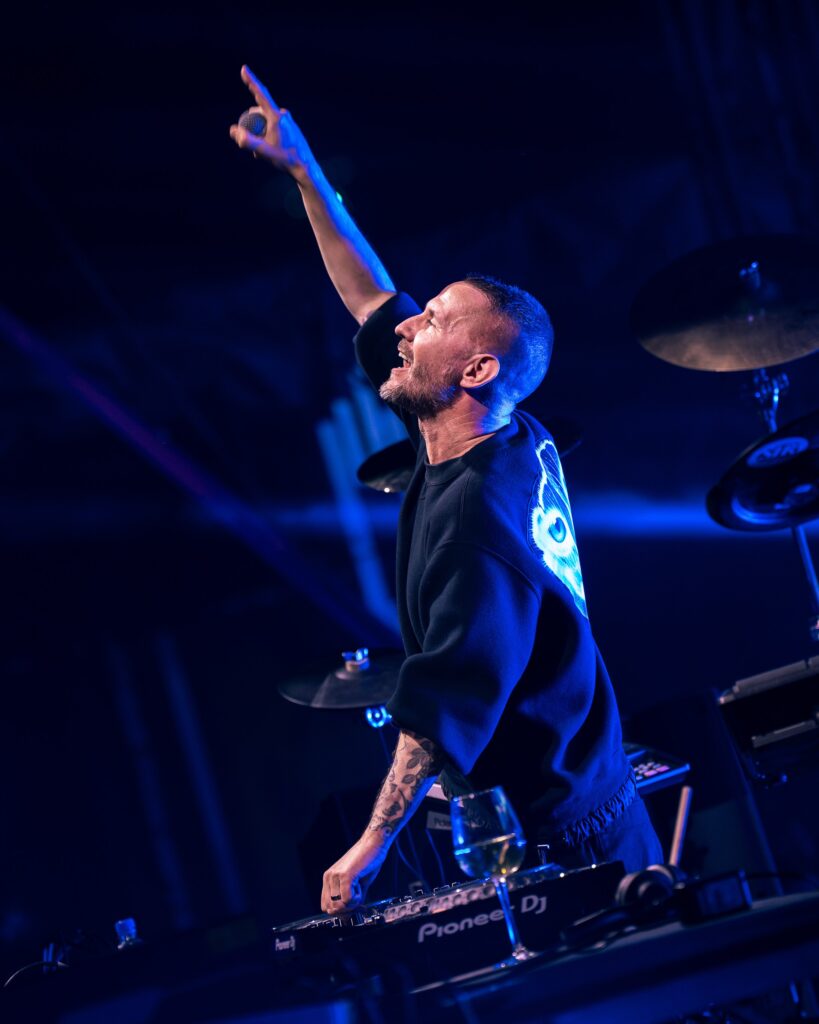
Karlsson: When I was performing with Miike Snow for hundreds of shows, I had a setup that kept on growing and changing with different things. When I did the afterparties, I kept on bringing the [Roland] SPD and some drums and stuff, and that’s something that I took into Galantis and I do today. Even at the smallest gig or the smallest club, I always have my SPDs, crashes, and some drums, and I use it all the time. I can’t do a show without it. When I get to bring whatever I want, I bring more, but even at the smallest scale, I always use a lot of trigger samples, layered things, uplifters, anything. I feel like I need to stay busy and be creative up there; otherwise, I go crazy. That has become my DNA of how I DJ.
DJ LIFE: Let’s touch on studio sessions and your studio set-up…
Karlsson: That has changed a lot over the years. I started forever ago on Cubase, then switched over to Logic, and I’ve been staying on Logic. Even if I wanted to switch, I don’t think I would ever do that, and I don’t think I should. I think it’s better to be really good at one thing. That has been a thing for me in production: too many choices and too many possibilities does not make better music. It’s actually less for me. I try to scale down and not have too many ways of creating music, because that’s just going to make me start two billion things and never finish anything. I definitely don’t need more ways of making music; I already have too many.
DJ LIFE: What about the early days and Miike Snow music?
Karlsson: Early on in Miike Snow, me and Pontus started to have a rule that when we were working in different studios and different places on tour, we would use whatever was in the room. If there was a trumpet, we would use it. If it was a piano, we would use it, even if it wasn’t tuned. That has been something that I still do, where I try not to go back to creating the same way, because creating the best piece of music has always been when I’m not familiar, when I’m trying new things out that I don’t know how they work. Most of the time, it’s mistakes that I do that create it.
DJ LIFE: Any preferred plug-ins or sample packs that fans should know about?
Karlsson: I loved always getting beta versions of plug-ins that weren’t really working, and then when they fixed it, the magic was gone to me. It was always those mistakes. I used Melodyne – probably some of the first producers using it and having it heavily in music production, like on Britney’s “Toxic.” It was actually the way Melodyne sounded when it was working way too hard, so it was fucking up. And that was the thing I wanted. I didn’t want it to feel like it was just fixing the vocal; it was my time to invent my own vocoder or something. I kept on doing that in whatever I’m using, trying to not follow any rules.
If I need help with detailing in a mix, there’s plenty of people that want to help me with that. I know that I need to stay in the big creative mode, because that’s where the value of time is way better spent. Any song that’s amazing and unique can have the shittiest mix on the planet and it will still do amazing. But if the song isn’t there and it’s the best mix ever, that’s not going to save anything. It’s not like I don’t like having my shit sounding good, but the priority needs to be on the right side there.
DJ LIFE: Speaking of “Toxic,” is there a story behind that record?
Karlsson: I was already in with Britney. I think I’ve produced and wrote over 25 songs for her. With “Toxic,” I was in the studio with her and working on some other songs that also came out. But I had done that track and never heard back from Kylie’s team, so I felt like, “Check it out, maybe it’s for you.” They were like, “Yeah, we want to put it on hold.” Then they wanted to record it, and we recorded it.
They put out the album and had another song as the first single; “Toxic” wasn’t even considered to be a single. Then people started buying it on iTunes, and it sold way more than the single. I got the call and they said, “I think ‘Toxic’ is the dark horse, it’s the wild card, and we’re just going to switch from the first single over to ‘Toxic.’” It was a good decision.
DJ LIFE: Let’s jump into the new project. You’ve mentioned that, even though it’s under Galantis, The Devil’s Tax Return is kind of its own thing. Could you elaborate?
Karlsson: What sparked it was that I always felt like it was sticking my hand out touching other people’s work when you are a writer and producer – like you don’t do that. But it was an itch that kept on coming back, because that’s not what I do usually. That combined with an obsession: every time I found out that a song that I loved turned out to not be the original, you have to give props to whoever heard the original song and felt the urge to make their own version.
DJ LIFE: An example?
Karlsson: I thought “Tainted Love” was by Soft Cell. It’s not the original; the original came out 17 years before by Gloria Jones – this cool, funky, soul version. Marilyn Manson did a cover of Soft Cell. There are so many like that. I love the Gloria Jones original, but the Soft Cell version is mind-blowingly good as well, and I would never have known that song at all if it wasn’t for that. Finding these types of things made me want to touch the songs that I feel are amazing. I don’t want to beat it, because I can’t – it’s already the best thing ever. But what if I make a new version of it where maybe you won’t even recognize it?
DJ LIFE: What were your concerns going into the project?
Karlsson: The only thing that mattered to me was that it still had somewhat of the nerve and DNA that made me fall in love with it. If that’s still in there and it’s dressed up in new clothes, I hope it gives this amazing song new shine. Most of them are 20-years old, and maybe some of the younger generation doesn’t know these songs. It’s so much harder to go in and reimagine a song that someone else already made great than to write a new one. There’s so much to learn from pulling something apart that you love, seeing how the arrangement is 10 bars instead of 12 in a section. I kept on doing it for years and have probably a hundred songs. I called this one Volume 1 because it’s the first bundle that I felt proud of and wanted to release.
DJ LIFE: Are you planning on doing a Volume 2? You mentioned 100 tracks…
Karlsson: I’m going back into the folder and finishing them. I felt it was better to just do it that way instead of trying to find the perfect 10. I’m just going to keep on releasing them under The Devil’s Tax Return, so people understand that Galantis is going to continue doing original work – but under The Devil’s Tax Return, I’m redoing songs that I love in my way.
DJ LIFE: Why The Devil’s Tax Return?
Karlsson: I named it The Devil’s Tax Return because I felt guilty from the beginning touching these songs. If I tell the world that I’m the devil from the start, I already know what you’re going to say: “You can’t touch that.”
DJ LIFE: Out of those 100, were there any songs that you liked so much that you felt you couldn’t touch them?
Karlsson: Most of them! That made it hard. Most of them went back into the folder, and then I just had the itch: “I just want to do it, though. It’s so good.” This is a way for me to celebrate those songs. There’s a very big difference between making a remix of a big hit record, beefing it up to play in Vegas, and what this is. I haven’t used anything from the originals in terms of master rights, stems, or vocals. Everything is completely new.
DJ LIFE: Have you been working these tracks into your live sets?
Karlsson: I did, but I picked songs that weren’t obvious where people would know instantly. The first one that I dropped, “Stay Alive,” was the first one that I kept on playing in the sets. Most just assumed it was a new song and they liked it. Either they’re happy with the version I have, or they go check out José González’s version. That song was written 100-percent by Ryan Adams, but he gave it away to José González for a movie. Ryan Adams did his version way later. When something is great, I think there should be multiple versions of that piece. It deserves that.
DJ LIFE: Where do these tunes fit into the today’s music?
Karlsson: There are too many releases a day now – 100,000 to 200,000 a day. It’s an ocean of white noise, and it’s hard to figure out where to find music because there’s too much coming out. We need real people to guide you to the shit that you like, not algorithms. We already have hundreds of thousands of songs that people forget, or they’re too young to know. I’d much rather listen to something that has this magic in it that’s old than try to find something new most of the time today. There is so much amazing music coming out, but it’s hard to find it.
DJ LIFE: What’s your take on AI in music these days?
Karlsson: When I start using new technology, like the first beta version of Melodyne where it was faulting, I found a way for me to use it my way. I don’t want to be against anything if it’s a creative tool. You can do so much with it, but a lot of the AI stuff is trying to replace the actual creativity by completing the whole song. Why not focus on just doing one part at a time?
DJ LIFE: How are you using it?
Karlsson: I’ve always been into sampling; that’s how I started my whole career in music production. It’s tough to clear stuff sometimes. What if I had small, chopped-up things and an AI helped me create new parts of those parts? I’m not using the master, I’m not using any melodies, it’s just a stab.
Where I have been using it is when I try something that is completely wrong. I throw in a bassline to the AI to sing it. Booka did a version of The Temptations’ “My Girl,” and I remixed that. I was playing around trying to find some new voices, and I threw in the wrong part and got this amazing thing that is going through the whole song – a boy doing the bassline. That’s dope, because now I’m getting this deep voice basically singing the bassline. I looped that through the whole thing. That’s a creative tool that I could not do before.
DJ LIFE: Are there other drawbacks?
Karlsson: I can hear the AI and Suno vocals all the time, and it drives me nuts. It throws me off a bit. I know that was a prompt right there. If someone overuses Auto-Tune the exact same way on two billion songs, I would have the same feeling. I will always be for creativity, but you will always need a human to create the best stuff because the best stuff is always made from mistakes, and humans make those mistakes better than AI. I’d rather have it focusing on one thing and not trying to create the whole thing. I love the creative part, starting new songs every day and new ideas.
DJ LIFE: Looking back at your career, do any sessions or songs stand out as being the most memorable?
Karlsson: Miike Snow is always going to be – we are finishing up the new album right now, actually. That space for Miike Snow is where we just do exactly whatever we want to do, completely non-judgmental. To do it with someone that you know really well has always been and will always be my favorite part.
I created that with Galantis as well. I have partners that I’ve written with who are like my best friends, and I keep on going back to writing and producing with the same people. I work with Hook n Sling every day, and we’ve been doing it since the start of Galantis. When you get to come up with the worst and the best ideas with someone that doesn’t judge you, and then it becomes something, that is the absolute best.
DJ LIFE: What about collab sessions?
Karlsson: Madonna was absolutely amazing every time I was in the studio with her. She was all over the console, wanting more reverb and involved in everything. Working with Dolly Parton was a dream come true and something that I never ever thought was going to happen. When she called me and asked me to come to Nashville and be in the studio with her, I felt like she’s one of the best ever. We recorded a video, and she was involved in what kind of video we were going to make. She called me to ask if it was all right that she designed her own clothing for the video set. She is one of the best to ever do it.

DJ LIFE: What is the Midsommar concept as opposed to a standard Galantis set?
Karlsson: I started Midsommar because it’s the biggest holiday in Sweden where we celebrate love, life, and connection with other people. The celebration starts early in the day with as many people as possible: long table, food, a lot of alcohol, early morning, dancing, everyone’s involved. It’s something that’s in me; I’ve loved celebrating Midsommar my whole life.
I got a gig in New York on that day five years ago, and I felt like I should bring it and try to show it at Brooklyn Mirage. I got as many flowers as I could possibly get in there and created an event that was my version of celebrating friendship, love, and connection.
DJ LIFE: How has it evolved?
Karlsson: Every year there was a new layer because people came and started dressing up. Now it’s its own thing, which is beautiful. It’s probably something that I’m the most proud of, out of everything I’ve done with Galantis. We did it for five years in New York only, and last year was the first time that I took it out of New York to Red Rocks, L.A., Chicago, and San Francisco. We’re doing Pier 17 in New York, and then Denver in October. It has become its own thing with the flower crowns and everything. I don’t even make any money from Midsommar – I just love doing it and seeing people put in the effort to come with flowers.
DJ LIFE: With the EP dropping soon, are you planning on incorporating more of the new tracks into these upcoming sets, and do you have any unreleased tracks you might tease?
Karlsson: I always do a VIP of most of my releases from the start. I want to do the original the way I feel the song should be, but I also want to have it in my set, and usually I need to rework it a bit. I start playing them before I’m done with them, so for every show, I’ve played the new VIPs of the new songs. Right now, I’ve got three VIPs going that are not done, but I’m playing them all. And yes, I have stuff that didn’t make it on the EP that I’m going to start teasing as soon as the EP is out, because I still have two songs to go from the EP.
I love working on the sets so much. Having new songs and working on my own versions for the set is a completely different process – what’s going to fit in the set? The energy that I’m looking for to put it in the set is not the same that I’m looking for when I’m just producing music. It’s a completely different thing.
DJ LIFE: Anything else you want to share with fans?
Karlsson: It’s so full now with the release of the EP. I am more inspired than ever, both where I’m at making music and doing these shows, specifically the Midsommar events. I’m so proud of bringing this to life.