

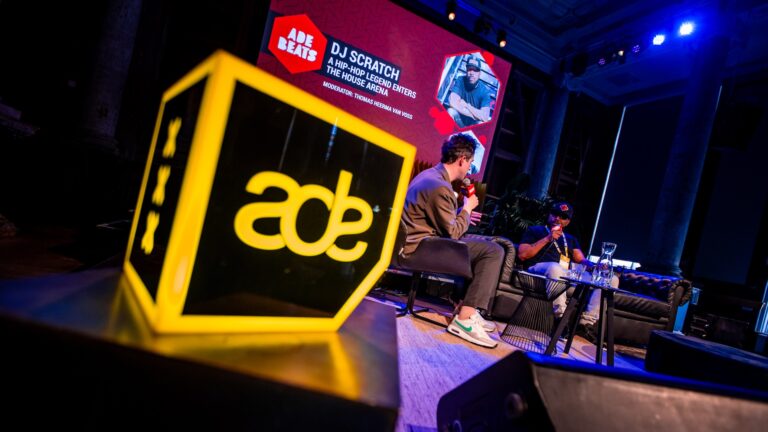
From underground raves to massive arenas, ADE ’26 turned Amsterdam into a five-day limitless dancefloor & industry hub for its 30th anniversary edition.
Amsterdam, NL – This past Oct. 21-25, Amsterdam Dance Event celebrated its 30th anniversary with over 3,600 artists performing at 1,300-plus events across 300 venues, marking its largest and most diverse lineup to date. With everything from intimate club nights to major arena shows, the five-day ADE program drew around 600,000 visitors from around the world, according to organizers, for DJ sets, live performances, gear displays, and industry discussions/workshops, celebrating three decades of electronic-music culture.
Across the city, packed dancefloors and high-energy DJ sets were a counterpoint to ADE’s conference discussions about the industry’s future. The main issues were AI, social-media representation, artist identity and branding, as well as the role of authenticity and storytelling all featured in conversations about how artists can stand out in an increasingly competitive market. Here are some highlights from ADE ’26:
Club Nights
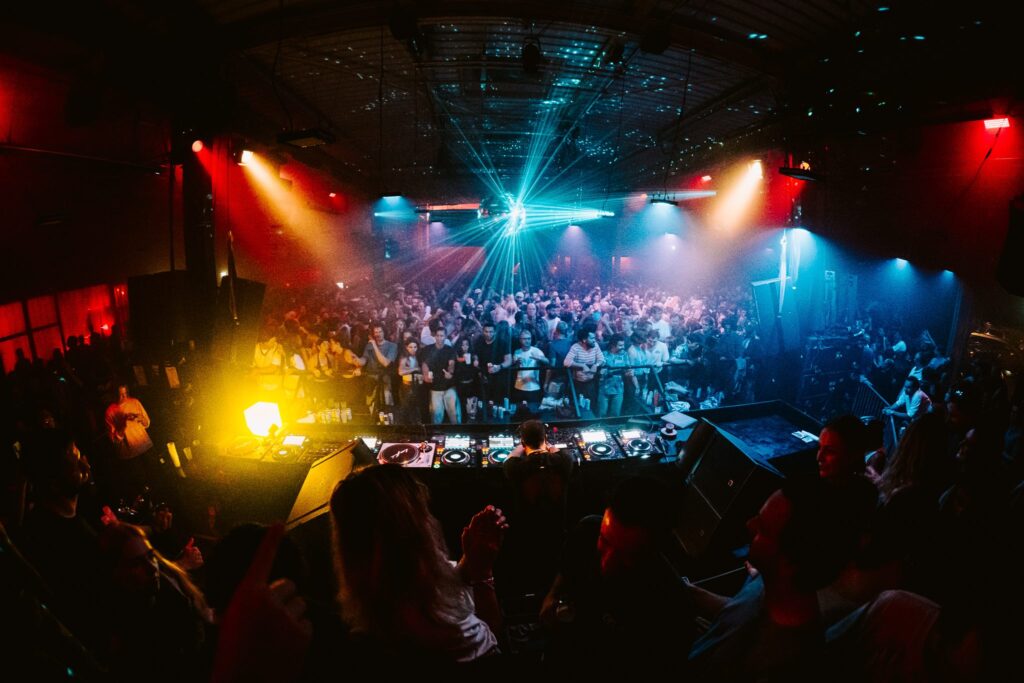
On Oct. 21, we kicked off ADE’s club program with a Prison Rave at Levenslang, curated by D’Angello & Francis. Housed in the former boiler room of the Bijlmerbajes prison, the single-room club hosted Scottish hard-dance DJ Hannah Laing. She brought relentless energy to a packed dancefloor, moving effortlessly between trance and hard bounce, transmitting her enthusiasm to the crowd. Her sharp beatmatching and seamless transitions carried the set from her iconic “Lethal Industry” remix to “Rewind,” her collaboration with The Rocketman. Bassjackers followed with a heavier, techno-leaning set, integrating tech-bounce sounds that kept the crowd just as engaged.
Later that night, Club Baggerbeest offered a different side of Amsterdam’s underground scene. At the intimate venue, Analog Kitchen presented how techno is made without conventional DJ setups, using hardware-only approach with only drum machines, sequencers and samplers. The project was joined by acclaimed engineer and immersive audio specialist Attie Bauw and guitarist Eran Hareven, whose live instrumentation added another layer to the performance.
Storytelling elements gave the event an almost fairytale-like atmosphere, inviting the audience into the world of its own. The result was an eclectic, interdisciplinary experience that felt closer to an experimental performance in a community arts centre than a conventional club night. Analog Kitchen’s hardware-based approach also went beyond standard stereo sound, allowing individual sounds and instruments to move around the room during the performance.
On Friday, Mochakk brought his Mochakk Calling event series to Gashouder as part of the venue’s pre-opening season. Situated in a massive former gas-storage tank, the historic industrial space offered the best of both worlds: the raw atmosphere of a warehouse rave and the scale of an arena show. The same contrast defined Mochakk’s sold-out set, as the 27-year-old Brazilian DJ kept a packed crowd moving throughout. His set revolved around a steady bassline and groove, with tracks constantly shifting within his signature Brazilian house sound. His take on “Fine Day Anthem” sent the crowd wild, phones raised across the room.
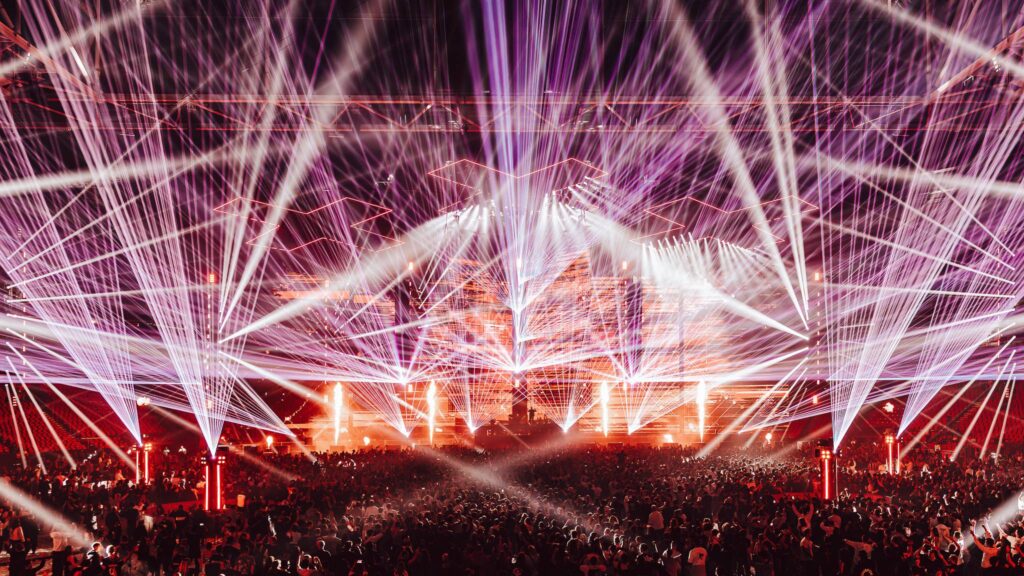
We concluded ADE’s evening events in epic style at the Amsterdam Music Festival (AMF). Less of a traditional festival and more of a massive arena spectacle, the lineup stacked EDM powerhouses from big-room house, melodic techno and trance genres, before its signature hardstyle finale. Armin van Buuren returned once again, performing alongside his frequent collaborator and co-vocalist SACHA, as well as guitarist Douwe Bob.
David Guetta brought his stunning Monolith show complemented with aerial acrobats floating above the crowd. Then, he joined forces with Marlon Hoffstadt for a special B2B, celebrating the recent release of their hit “Caught Up.” Nicknamed “Daddy Trance,” Hoffstadt delivered a high-energy set that had the entire arena dancing as one when he played “Makina Time,” his collaboration with Dimitri Vegas & Like Mike.
Six months pregnant and closing out her tour season, Amelie Lens delivered a electrifying set that put the entire arena to shame. The scale of AMF’s production was even bigger this year, with more extensive pyrotechnics and fireworks than previous incarnations.
Gear/Tech
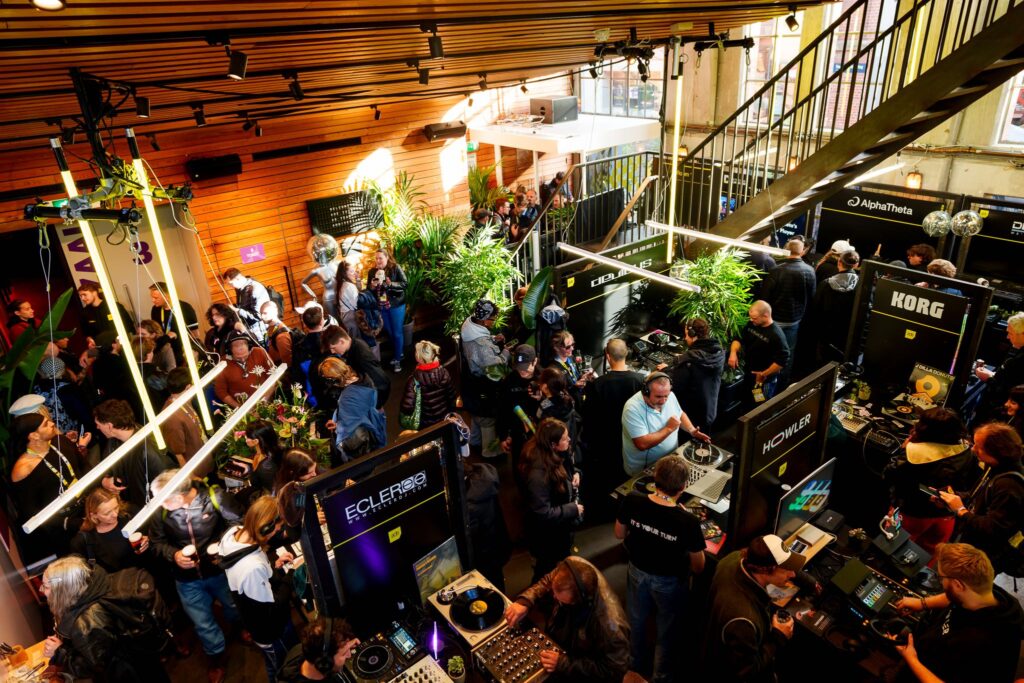
The ADE Lab Discovery, hosted at Het Ketelhuis in the Cultural Park Westergas, allowed producers and DJs to test out new hardware and set-ups. Exhibitors included AIAIAI, AlphaTheta, Amptec, And the Groove Remains, Arturia, Audeze, Bjooks, Decksaver, Ecler, Geeky Punks, Hercules, Howler Audio, KORG, NAP Works, Reloop, Roland, SAE, Technics, Telepathic Instruments, TRIBE, Union Audio, Vinylify, Volt Music Store, and Yamaha.
Seminars & Keynotes
AI is reshaping DJ culture and production processes, forcing a high-stakes reckoning over consent, ownership, and creative control. On Oct. 23 in the Felix Meritis venue, “Artists on AI, A No-BS Roundtable” brought together Mathame’s Matteo Giovanelli, BT, Portrait XO, Dave Clarke and Miss Kittin to debate the opportunities and risks of machine-learning in music.
Portrait XO argued that the use of artists’ work without their consent raises questions that go beyond copyright – it’s a matter of fundamental human rights. She called for systemic changes and better incentives to protect the creators, warning that “artists are currently used as accessories, ‘flashy new things,’ which gives more space to further exploitation.”
However, BT offered a different perspective, arguing that “everybody is their own dataset and it has a value,” explaining that artists’ work and creative identity can inform AI tools without necessarily replacing the human artist. Dave Clarke distinguished his interest in machines and sound engineering, distancing himself from the current AI debate, while Miss Kittin argued she did not want machine-learning applications to “think like her,” preferring tools that challenge her creative process. She described experimenting with AI as “playing with fire.” Miss Kittin also stressed the importance of preserving individuality: “Kids need to learn self-esteem to encounter their weirdness. Any tools, techniques or technology will cultivate your difference.”
The challenges facing women DJs in Brazil and the differences they encounter when working in other countries were at the center of the “Female DJs in Brazil: Breaking Beats, Breaking Barriers” panel at the Felix Meritis on Oct. 23. Brazilian DJs DJ Ray, Galecta and LUA discussed sexism, racism, safety and unequal treatment in bookings, highlighting the extra barriers women can face while building their careers. Safety was a particular concern when travelling for gigs. LUA explained that male DJs often travel with just a booker and manager, while women often need a larger team for protection, creating additional costs and logistical challenges.
Galecta highlighted another glaring issue: booking fee inequality. She said she walked away from a major slot after the headliner took almost the entire fee, despite Galecta pulling a significant crowd of her own. The discussion also turned to how European venues sexualize Brazilian women. As DJ Ray pointed out, Brazilian female DJs are frequently booked for their appearance rather than their sound, yet face heavy double standards for playing music that male DJs get a pass on.
As she explained, “There’s always very sexual vocals in male DJs sets, but if we play it… and women are judged if we play the same track with the same vocals.” Galecta noted that speaking out can be easier in Europe, where artists may find more support, and emphasized the value of relying on one another. Their discussion highlighted that greater visibility on lineups is only part of the picture: fair fees, safer working conditions and the freedom to express themselves remain essential to women’s progress in electronic music.
The Future
Dates for the next edition of ADE were announced: October 20-24, 2027.