

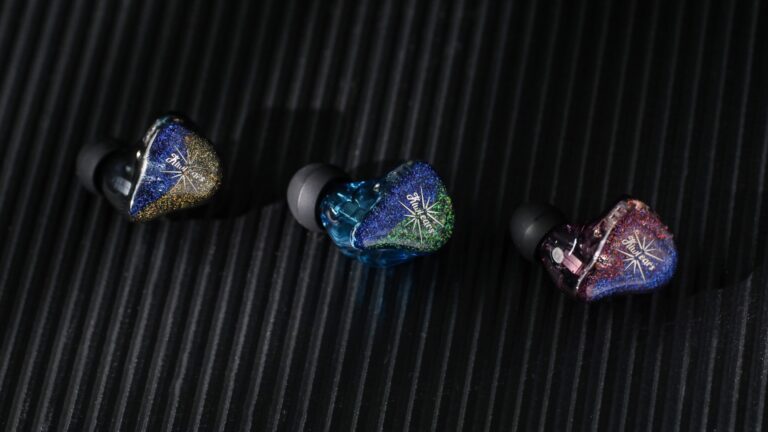
Linsoul is a prominent Chinese retailer and distributor that specializes in high-fidelity personal audio equipment, particularly in-ear monitors (IEMs), audiophile headphones, DACs, and amplifiers. For the DJ and studio markets, their IEMs are applicable, so we took a look at four of those products, all varying in degrees of price and performance.
IEMs
If you’re used to club wedges, nearfields and big subs, in-ear monitors can feel a bit… surgical. But the latest crop of “musician-tuned” IEMs are getting surprisingly close to putting a mini control room in your ears – without losing the fun.
Here we’ll look at four sets that sit on a clear price ladder:
- Kiwi Ears Forteza: $59
- ZiiGaat Odyssey: $229
- Kiwi Ears Orchestra Lite: $249
- Thieaudio Hype 4: $399
All four will absolutely beat “free-with-your-phone” ear buds for cueing, checking mixes or sneaking in edits on a train. But as you climb the price ladder, both sound quality and build take noticeable steps up, and the tuning shifts from “party” toward “portable studio monitor.”
Kiwi Ears Forteza
Bass-First Fun on a Budget: Forteza is the obvious entry point: a 1BA + 2DD hybrid with a three-way crossover, tuned for what Kiwi Ears themselves call, a “rich and lush sound signature” with thick, impactful bass.
Sound:
- Sub-bass is big, rumble and a bit slow – very satisfying for EDM drops and hip-hop, less ideal if you’re judging kick tightness in a dense mix.
- Mids are warm and slightly thick; vocals and guitars come forward, but can feel overshadowed by the low end if you’re pushing volume.
- Treble is energetic with decent detail, but note that some unevenness and occasional sharpness or sibilance, especially if you’re sensitive up top.
For DJs, Forteza is easy to like: loud, bassy, exciting, good isolation and imaging that’s “more than acceptable for the price.”
For engineers, it’s more of a guilty-pleasure set than a reference. You can check vocal sibilance and FX tails, but the boosted lows and uneven treble mean you probably shouldn’t sign off a master on these alone.
Build & comfort: The shells are 3D-printed resin in a semi-custom shape, with sparkly faceplates that look far more expensive than $59.
The downsides are textbook budget-IEM: a very basic cable and generic tips that you’ll likely want to upgrade, and they benefit from a bit of extra power from a dongle or interface.
Takeaway: Fantastic value and legitimately fun, but voiced more like a “party PA” than a flat monitor.
ZiiGaat Odyssey
Musical, Smooth, & Nicely Grown-Up: Jump up to around $229 and ZiiGaat’s Odyssey feels like the first step into “serious tool you might still enjoy on the bus.” It’s a 1DD + 3BA hybrid with a custom 10 mm Topology dynamic driver for bass and Knowles BAs for mids and highs.
Sound: I characterize Odyssey as warm-neutral and relaxed: clean, textured bass, smooth mids, and a non-fatiguing treble that favors long sessions over hyper-etched detail.
- Sub-bass reaches well down, with more “subwoofer-like” weight than the graph suggests, though the attack is softer than something like Hype 4 – think rounded, not slam-happy.
- Mids are the star: natural, slightly forward vocals and instruments with a pleasing sense of body.
- Treble is intentionally relaxed; you give up a bit of air and micro detail, but you can listen for hours without your ears getting fried.
For studio use, Odyssey is good for checking balances and vocal tone, and for catching obvious low-end problems. But it’s tuned for musicality over analysis, so tiny mix flaws might be glossed over.
For DJs, it’s a chill contrast to a loud booth – great if you want to hear the whole track as a piece of music rather than just beatmatch.
Build & Comfort: You’re firmly out of budget territory – the shells are nicely contoured, with quality finish, metal or metal-accented construction depending on batch, and a decent cable and accessory pack.
Isolation and comfort are solid for longer sessions, and the overall feel is “mid-tier monitor” rather than “chi-fi experiment.”
Takeaway: a sweet spot for people who want something musical, smooth and forgiving, with enough resolution to be useful but not brutally revealing.
Kiwi Ears Orchestra Lite
The First Real “Work Tool”: At roughly the same price as Odyssey ($249), the Orchestra Lite takes a very different path: eight balanced armatures per side, tuned specifically to maintain a natural, balanced tonal profile suitable for professional musicians and engineers.
Sound:
- The bass is quick and controlled – impressive for all-BA – but it’s not a dynamic-driver slam monster and can feel light if you’re used to club levels.
- The midrange is the highlight: vocals and instruments are rendered with a natural timbre and “emotive weight,” making it easy to judge tone, pitch, and compression.
- Treble is musical and detailed but not especially airy; treble-heads might find it a bit safe, though that same restraint means very low fatigue.
Orchestra Lite as studio-monitor-like in its intent: a mostly flat, slightly warm tuning that prioritizes clarity and balance over wow factor.
For mixing and editing, this is the first set in the quartet where you can realistically work on vocals, guitars, and midrange-critical material and trust what you’re hearing, as long as you cross-check the subs on monitors or a different headphone. Imaging and layering are strong for the price, so panning and reverb depth translate well.
For DJs, Orchestra Lite can feel a bit polite: it tells you what’s happening, but it doesn’t hype the drop.
Build & Comfort: This is where the price jump over Forteza is really obvious. You get:
- Beautiful, all-resin shells with visible internal drivers and a more “custom monitor” aesthetic.
- Excellent ergonomics and fit; multiple reviewers call it one of the most comfortable universals they’ve used.
- A better stock cable and a practical case, plus a generous selection of tips.
Takeaway: Think of Orchestra Lite as your first real reference IEM – midrange accuracy and imaging that start to feel like “gear” rather than “gadget,” with the trade-off of more restrained bass and treble excitement.
Thieaudio Hype 4
Portable Studio Monitor With Sub-Bass Swagger: At the top of this mini-ladder sits the Thieaudio Hype 4 at $399. It’s a 2DD + 4BA hybrid using Thieaudio’s IMPACT isobaric dual-dynamic sub-bass module plus four Sonion BAs, aiming for a sub-bass-boosted neutral tuning.
Thieaudio and I describe it as performing “as portable studio monitors,” with wide soundstage, excellent stereo imaging and layering that rival full-size studio cans.
Sound:
- Bass digs very deep with well-controlled sub-bass and punchy mid-bass, but the tuning keeps it from bleeding into the mids – it’s powerful yet disciplined.
- Mids sit close to neutral with a touch of warmth; they’re not as forward as Orchestra Lite, have slightly recessed vocals on weaker sources, but resolution and textural detail are a clear step up.
- Treble benefits from high-end Sonion “Hummingbird” drivers, delivering extended, detailed highs that stop short of being harsh.
For studio engineers, Hype 4 is the one that best joins the dots: it gives you enough sub-bass to judge modern low-end, a largely honest midrange, and technical performance (imaging, microdetail, separation) that gets close to good open-back headphones. It also scales with source quality, so feeding it a clean interface or DAP pays real dividends.
For DJs, it’s basically a club-capable monitor in your pocket – big, controlled low-end, clear cueing, and isolation/comfort that work well for long sets.
Build & Comfort:
You can feel where the extra money goes:
- Sculpted shells with smooth curves and multiple color options that look and feel premium.
- A legitimately high-grade silver-plated OCC cable (though some wish it were modular 3.5/4.4mm).
- Good isolation, low driver flex, and a spacious case – “pro” rather than “hobbyist” presentation.
The accessories (especially tips) could be more generous at this price, but overall finish and durability feel a step above the others.
Takeaway: The Hype 4 is the set that most convincingly behaves like a reference monitor with sub-bass enhancement – trustworthy enough for serious work but still fun enough for pleasure listening.
So what do you actually get by spending more?
Across these four, there’s a clear progression:
- Tuning focus
- Forteza: big, fun, colored – good for enjoying music and rough DJ work.
- Odyssey: smoother, more balanced, musical for long sessions.
- Orchestra Lite: mid-centric, neutral-leaning “engineer’s ear” with limited bass weight.
- Hype 4: neutral with sub-bass lift – closest to a studio monitor voicing.
- Technical performance
- Resolution, imaging and layering all improve as you go up. Orch Lite is the first where you can confidently place elements in a dense mix; Hype 4 is where spatial cues and micro detail start to compete with full-size headphones.
- Build & Ergonomics
- Shell quality and finish get more refined, cables improve, and cases/tips get more practical as you climb. Forteza feels like a well-dressed budget set; Hype 4 feels like a pro tool you’d happily toss in a gig bag.
If you’re a DJ or studio engineer who doesn’t live in IEMs, a simple way to frame it is:
- Want a cheap, fun backup for gigs or travel? Forteza.
- Want something musical and easygoing that still gives you a decent read on your mix? Odyssey.
- Want a budget “second pair of monitors” in your pocket, especially for vocal and midrange work? Orchestra Lite.
- Want the closest thing here to a real reference monitor with club-ready low-end? Hype 4.
Any of them will do the job in a pinch. The question is: How much you want your IEMs to behave like a tool versus a toy? And how much you’re willing to invest to shrink your control room down to two tiny shells?
You can purchase IEMs from them directly through the Linsoul Audio Official Store, or via their official retail storefronts on marketplaces like Amazon.