

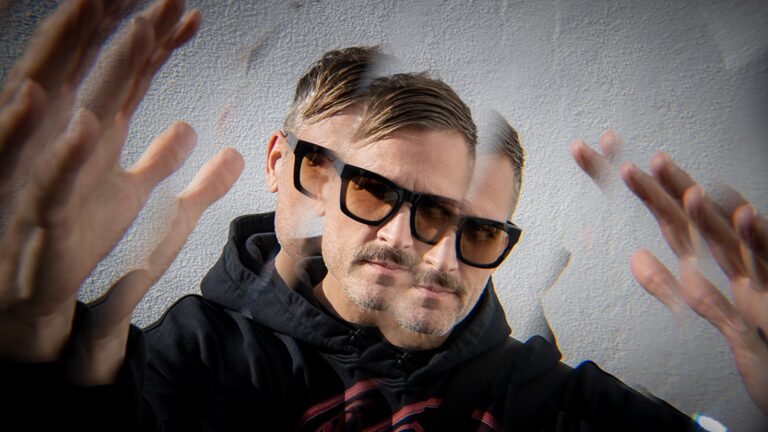
EDM Superstar Kaskade Returns with undux, His Most Emotional Album Yet
For more than two decades running, Kaskade has stood front and center of electronic-dance music’s evolution.
Not only has the Chicago-born/Cali-based DJ/producer (aka Ryan Raddon, 54) remained at the forefront of the circuit, he’s helped shape the culture and served as a leading contributor to its mainstream rise. With an imprint on the scene that’s undeniable – platinum-selling singles, chart-topping collaborations, and history-making festival moments – Kaskade returns with his newest full-length album, undux, available now through Monstercat and his very-own imprint, Arkade.
Without question, over the past few years alone, the influence of the eight-time Grammy-nominated phenom has only intensified. Whether commanding the Coachella crowds, elevating global events like SXSW, or breaking records with Kx5 – his collaborative project with deadmau5 – at the Los Angeles Memorial Coliseum, Kaskade has incessantly expanded both the scale and the soul of electronic music.
Kaskade has also successfully crossed into sports entertainment. For example, in 2024, he became the first-ever in-game Super Bowl DJ, performing to over 123 million live viewers from the Vegas game, and later that year, he served as Formula 1’s first-ever starting-grid DJ in Miami. From the X Games to LIV Golf tournaments to New York’s Central Park takeover and surprise festival sets with artists like John Summit and Alison Wonderland, Kaskade’s ability to electrify any stage has transformed him into a fixture of global pop culture.
Amid a plethora of recent accomplishments, Kaskade’s newest album, undux, signifies a creative pivot inward – serving as an introspective, story-driven body of work, arriving after years of singles tailored for an always-on streaming world. Crafted through seasons of personal upheaval and artistic recalibration, undux represents a return to the narrative style that shaped Kaskade’s earliest work. Rather than chasing the next explosive drop, he lets vulnerability lead, intertwining themes of memory, renewal, and clarity across deeply emotional tracks.
The undux singles released throughout the fall months – “DNCR,” “Imprint,” “I Can’t Make You Love Me,” and “Started Over” – offered a glimpse into the album’s emotional terrain and the tension between holding on and letting go. At its core sits “Obvious,” a track driven by Raddon’s own voice and raw self-reflection, signaling one of the most personal chapters in his career. In many ways, undux serves as less a comeback and more a reconnection – he’s an artist who has nothing left to prove, but he’s rediscovering the power of storytelling through sound.
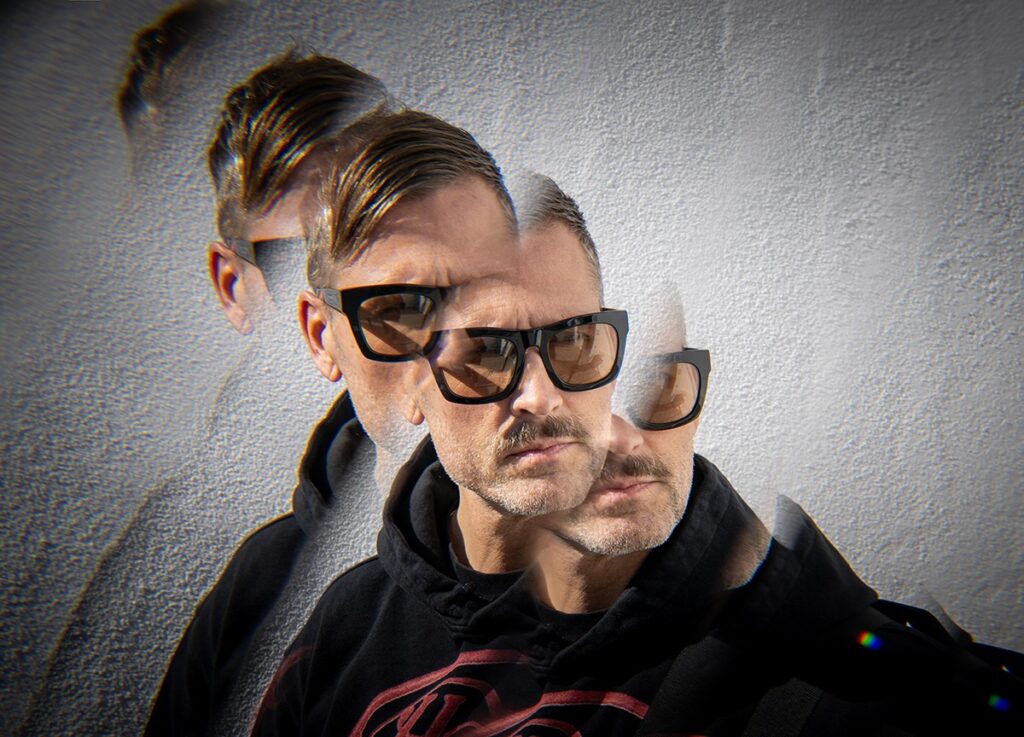
With a legacy that only continues to expand, Kaskade ushers in the latest chapter of his career journey – and we’re here for the ride. Coinciding with the release of undux, Raddon sat down with DJ LIFE to discuss the beginning of a new era, what’s to come, and all things Kaskade. Here’s how it went down…
DJ LIFE: Let’s start at the very beginning – and clear up its proper foundation. How, when, and where did the name Kaskade originate?
Kaskade: There’s so much lore around this I almost don’t want to answer. It’s pretty simple… I was on the precipice of beginning my professional DJ career and loved that you almost had a secret identity as a DJ. The icons that formed my love of house used aliases. Juan Atkins was Model 500, Derrick May was Rhythim Is Rhythim, Kevin Saunderson was E-Dancer, and Richie Hawtin was Plastikman. I read somewhere that the word “Cascade” was one of the most pleasing words, aesthetically, so I leaned into that. Made it my own with a few misplaced K’s and the rest is history.
DJ LIFE: Looking back on your career, when did you have your first real “pinch-me” moment, when you realized this might just be bigger than you expected?
Kaskade: At Winter Music Conference right after “It’s You, It’s Me” came out [2003]. I played it at a small gig and saw that the room paid attention. This was a room of my peers, and people I looked up to. When this song turned their heads, it was the moment I thought maybe I had a chance.
DJ LIFE: What came first for you, DJing or producing? Do you remember what your first or early DJ setup looked like? First studio set-up and gear/DAW?
Kaskade: I began DJing early on. I went with the classic Technics 1200s because that’s all there was. I hauled my set-up to and from a club night I had started and shortly moved into producing after that. I lived in a warehouse with a couple of friends, and it seemed like I was doing exactly what that environment demanded. A computer, a copy of Logic Pro and a dream was basically my set-up.
DJ LIFE: How about when it comes to pre-show Kaskade. What’s the hour before your DJ set look like and consist of? Do you have any superstitions or rituals/routines?
Kaskade: I wish I had some esoteric answer for this, but truthfully it’s very easy. I can be immersed in whatever is going on around me up until about 10 minutes before the set. Then, I like to dive into my own brain and map out what I’m picking up from what’s happening out in the crowd. Are they hype? Are they bored? I like to do a real-time temperature check of what I’m walking into and plan the first few songs accordingly.
DJ LIFE: Compare what today’s Kaskade pre-show routine consists of as opposed to 10 years ago? 15 years ago? Was it different, and if so, how?
Kaskade: As I’ve gotten further along in my career, there are a lot less nerves and anxiety. Not to be confused with apathy, I just definitely feel more aligned with the enjoyable challenge of it all. I’m not intimidated by a large crowd anymore – I am invigorated.
DJ LIFE: Leading up to this newest era of Kaskade music came some major career accomplishments and accolades. What was the driving force behind the formation of Kx5 with your longtime friend and collaborator Joel Zimmerman [aka deadmau5]?
Kaskade: It was bound to happen and eventually the opportunity just revealed itself during COVID. I was able to escape the isolation of being on lockdown by creating music with Joel from two very different parts of the planet. I think the world slowing down gave everyone a chance to do the things they always said they wanted to do. Then we just did those things.
DJ LIFE: You recently performed at the Quasar Stage at Coachella with Idris Elba this year and you have a solo set scheduled for Coachella 2026. What can you share with us about the b2b set and how this forthcoming set will be different?
Kaskade: Doing a b2b set is always vastly different than a solo set, no matter the stage or the person I’m on with. Working with Idris on our Coachella set was really fun – that guy is a good time. We didn’t have very much planned out, and even up to the last minute didn’t know what our opening number would be. Playing 2026 Coachella will be a big moment for me. I always like to stretch out and see how much I can give the audience.
DJ LIFE: When it comes to performing at prominent festivals or events – Coachella, X Games, Super Bowl – how do opportunities like that help advance your career?
Kaskade: I’m not sure they advance my career, to be honest. I love these opportunities because obviously I get to appear in front of people who otherwise might not have come across me. But I’ve found more than broadening my base, it energizes my existing base and those are the people I’m here for. If they get stoked to see me on TV and explain to their family – this is the guy they’ve been seeing at these festivals and clubs, I can get with that.
DJ LIFE: Tell us about your experience performing during Super Bowl LVIII in Las Vegas. You got the call to replace Tiësto, who was a last-minute scratch.
Kaskade: Well, that was fun. It was pretty short notice for such a visible event, but that’s where my team jumps in. I have surrounded myself with people who can execute anything under almost any circumstances and they came through. Playing in the stadium was a dream for me on a personal level. I grew up watching football with my family and the Super Bowl is the Super Bowl, so obviously there were some bragging rights bestowed on me for the next family gathering. Getting to play “Escape” in front of 123.7 million people on their TV sets was awesome.
DJ LIFE: Were there added pressures or nerves going into the performance, knowing you’d be playing both before and during the game, making you the first-ever DJ to perform throughout the Super Bowl?
Kaskade: I wouldn’t say the nerves were any different than normal. The stadium crowd itself isn’t that much larger than a normal festival crowd, and the TV watching public is just a sort of ghost in my mind while I was playing. I just knew I needed to play some hits and keep the Redux vibes to a minimum.
DJ LIFE: As an 8-time Grammy-nominated artist, describe the feeling you felt when you received your very first nomination…
Kaskade: In 2013, when Fire & Ice was nominated for Best Dance/Electronica Album I was still on my way up in this trajectory. Winning a Grammy was less important to me than being nominated. Just the fact that my peers were giving me their support, saying I belonged in this category and in the music industry in general gave me a hit of confidence. Like most people, there have been times where I’ve thought I wasn’t able or capable of succeeding. When that first nomination came through, I did see it as confirmation that I could do this.
DJ LIFE: How and when did you come up with the undux concept?
Kaskade: The idea of undux came together as I was making the album. I had tried my best to continue creating in the spirit of what I had done before. But my heart and head wouldn’t cooperate with that intention. I was going through a lot of changes in life, and the way I spoke, the way I lived in this world, the things I wanted to do and the things I wanted to rinse out in the process of making music had all shifted. I couldn’t reflect things all being as they were; I had to reflect some new and uncomfortable feelings. That came through in undux. It sort of conceptualized itself and brought me along for the ride.
DJ LIFE: Break down the differences between Redux and undux and what they both mean to you…
Kaskade: Redux started as a rebellion against the size of a show’s spectacle. I wanted to bring it all back to the sweaty pulsating dark dancefloor where a beat might threaten to drop, but you had to earn it by being let up and down all night. Redux caught on way more than it should have, which is exactly what it should have done. If I’m fatigued by the spectacle of a show overpowering the music, how must the audience feel?
So, undux is different. It is in the family of Redux, as it’s not about hands-in-the-air big air-horn moments, but it has some pretty profound moments. It’s a story from front to back and it’s a story about you, the listener. It didn’t need to be specific because I’m sure everyone listening has gone through a change, something they didn’t expect and maybe something they didn’t want, but got to the other side of it and noticed that… hey, it’s actually OK here, I am OK here, and the music got me through. It’s the universality of struggle and triumph. Hopefully, everyone who it speaks to can recognize that.
DJ LIFE: If you could only play five of your hits in your DJ sets for the rest of your career, which are you choosing and why?
Kaskade: “Eyes” because it’s a fan favorite. “4 AM” because seeing a “4 AM at 4 AM” post never gets old. “Room for Happiness” because it’s probably the record-holder for lyrics most-tattooed on fans. “Disarm You” because when I dip the volume out and the crowd chimes in on the “whoa-oh-ohhhh” part, it still gives me chills. “On Your Mind” because ending a set with this seems like the proper punctuation.
DJ LIFE: You’ve had longevity in an industry that’s known for burnout. What business or career decisions do you feel were pivotal in sustaining that longevity?
Kaskade: It’s a boring, but crucial decision I made to prioritize my health. This industry is built to break you. The wild sleep and travel cycles, the big crowds and massive moments. Then, the demand to sleep in the three-hour block you have between shows. It can really burn through a lot of mental and physical health reserves. I’ve had to stay healthy by kicking things out of my life that don’t work for me. I don’t drink; I don’t do drugs. I try to eat as many tacos as I can. I surf and I do yoga. I soak up sun when I can and say “no” to things when I don’t have the bandwidth for them.
DJ LIFE: When it comes to AI use in music, do you see it as a tool for creativity or as a potential disruptor?
Kaskade: Unpopular opinion… I say let’s go with it. Every so often there is a profound disruption in entertainment… whether it’s movies switching from silent to sound, live action to CGI, 8-tracks to cassettes to CDs, vinyl switching to CDJs and then all of that switching to streaming. And every time, people shake their fist at the sky saying this is going to kill the industry. But art persists and finds a way of outsmarting technology and advancement into needing the artist, always. This will continue. We may feel it shift, but if you move with it, could be that your vantage point improves.
DJ LIFE: As you look towards the next five to 10 years… what would you like to be remembered for? What legacy do you hope to leave behind in dance-music history?
Kaskade: I’m happy to have been here for what has been the most elegant birth of a music genre. From the love of disco and new wave came the electronic-dance music we have now and being one of the authors of this story is such an exciting thing to reconcile in my mind. Igniting the Las Vegas residency model before Ushuaïa [in Ibiza] was happening, just from an idea I had of doing a seasonal residency and solidifying that DJs are artists and have some leverage changed the music scene from Coachella to Ibiza. Electronic music changed the face of Las Vegas, and that changed the course of this music forever. The fact that I had something to do with that makes me proud and blows my mind all at the same time.