

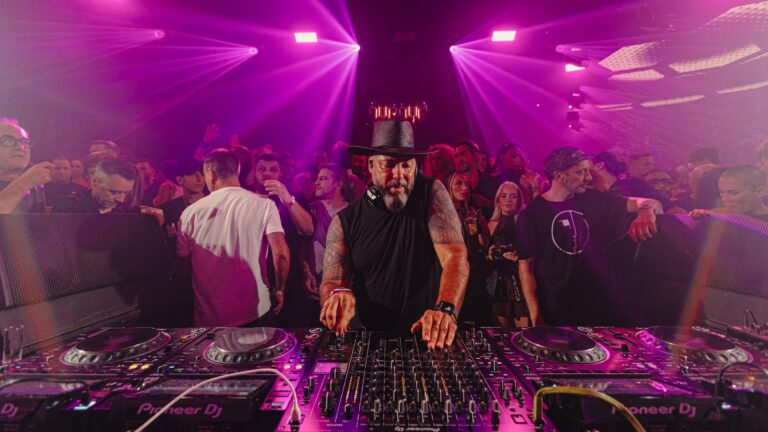
Twenty Years Since His Last Album & Six Years in the Making, Roger Sanchez’s “Spectrum” Celebrates the Sonic Colors of Clubland.
Long before the internet age fragmented electronic music into micro-trends and algorithmic playlists, Roger Sanchez was already fundamentally shaping the architecture of global dancefloors. From his earliest days cutting his teeth in the fierce underground circuits of New York City, the globally celebrated, Grammy-winning DJ/producer, and Stealth Records label head has stood as an uncompromising monolith of house music.
Over a legendary, multi-decade career, his name has become synonymous with continuous evolution – a rare talent who can command the sweaty intensity of a dark basement club just as easily as a massive, stadium-sized music festival. Whether delivering timeless anthems like 2001’s monumental “Another Chance” or mentoring the next generation of house-music talent through his own label imprint, Sanchez has spent decades staying fiercely authentic to the groove, proving that true passion will always cut through the noise of a saturated industry.
Sanchez is further cementing his legacy with the release of Spectrum, his first full-length studio album in 20 years. Released this past June via Stealth Records, the massive project represents a meticulous six-year labor of love that was accelerated when the global pandemic unexpectedly rooted the nomadic artist to a single spot. Sanchez says that the rare period of extended stillness allowed him to drill down on a bold visual and sonic philosophy that treats sound as an array of distinct light frequencies.
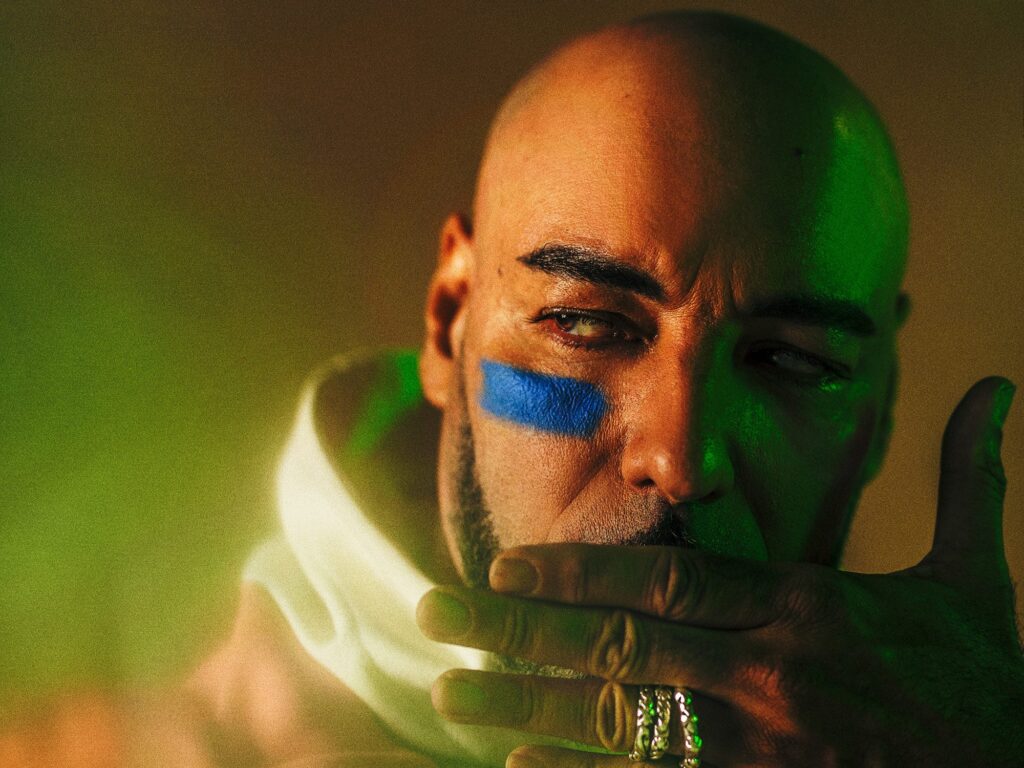
The resulting album is a multi-dimensional landscape that moves effortlessly from the bright, soulful, and radio-ready tracks of the visible light spectrum to the deeper, driving, and emotionally weighted club tools of the infrared and ultraviolet realms. Much of Spectrum was conceived and written during an influential period spent in London’s Shoreditch area, a creative chapter that heavily drenched the record in raw, bouncy, and industrial U.K. summer club sounds. To bring the vast musical canvas to life, Sanchez compiled a world-class, cross-generational roster of collaborators that spans multiple genres, eras, and cultures.
Longtime house heads and new-school shufflers alike were treated to advanced previews via three massive singles – the basement-ready, tech weapon “Grinnin’” alongside Fedde Le Grand, the uplifting house groove “Come My Way,” and the driving dancefloor cut “Temptation” with Low Steppa and Ragdoll. The album also features a stunning, vocal centerpiece, “How Do We Say Goodbye,” crafted with in-demand vocalist Karen Harding, which beautifully pairs a trance-like ambient intro with a thunderous house drop. Additionally, contributions from U.K. garage mainstays Donae’o and Kele Le Roc, pop icon Melanie C (formerly of The Spice Girls), and Chico Castillo round out a well-balanced tracklist.
To celebrate the release, Sanchez is taking Spectrum on a continent-spanning summer tour, designed with both the dedicated vinyl selector and the festivalgoer in mind. Sanchez’s grueling summer schedule includes high-profile festival sets across Europe, appearances at leading parties, and notable returns to the U.K.’s legendary Manchester-born club heritage with dedicated FAC51 Hacienda and Hacienda Classical sets in Birmingham, Nottingham, and Milton Keynes. The tour also spans London’s industrial warehouse mega-space Drumsheds, Monaco’s Amber Lounge, and a massive primetime residency at Pacha Ibiza for their upgraded “Flower Power” nights.
In the weeks leading up to the Spectrum album release, the house-music legend has commanded the global electronic media landscape, delivering a highly talked-about, live-remixed B2B broadcast set with TCTS for KISS and making a major national television appearance on the U.K.’s Sunday Brunch.
Living in an era where online visibility and viral algorithms often prioritize content creation over genuine track selection, Roger Sanchez stands tall as one of the scene’s most uncompromising tastemakers – and when it comes to showing the world what he’s got in store for the dancefloor, he’s only just getting started. We recently caught up with the legendary Roger Sanchez.
DJ LIFE: Let’s take a trip back in time. What was your original bedroom-DJ set-up?
Roger Sanchez: I started out with two Technics SL-1100 belt-driven turntables and a Gemini mixer. The belt drives would lose tightness after much use, and that would make precise mixing more challenging. The pitch was a dial, which was less precise than the later Technics 1200s with the slide pitch. I learned how to maintain beat matches with a fluid and changing format.
DJ LIFE: What does your current tech rider look like? Anything you can’t live without?
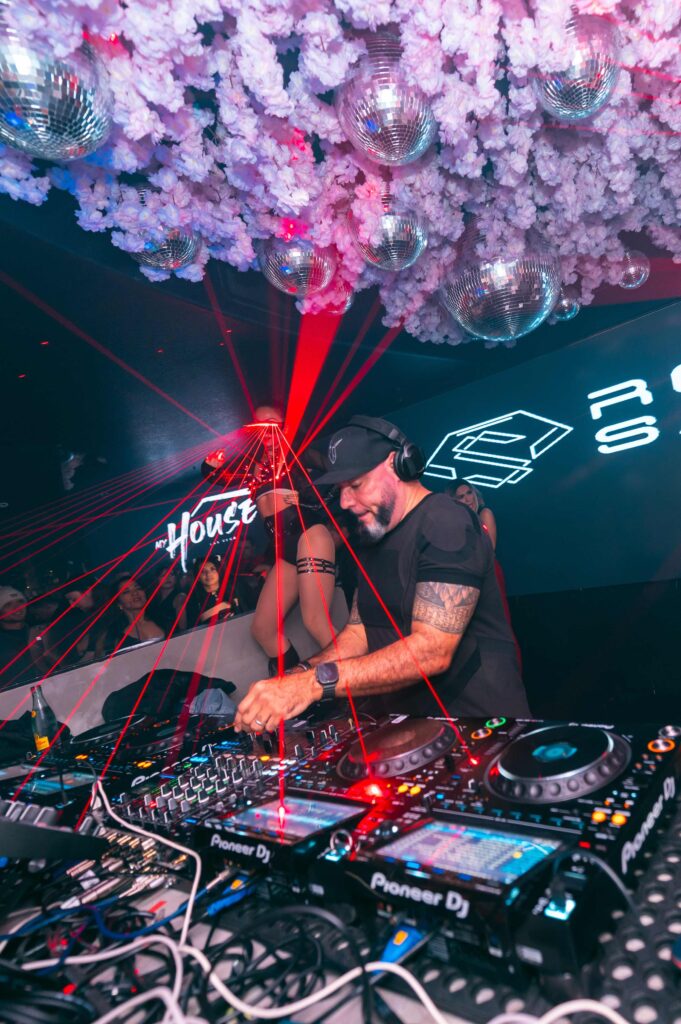
Sanchez: I’m playing with four Pioneer CDJ-3000s and DJM-V10 or DJM-A9 mixers, an RMX-1000, and I can’t live without the CDJs – I use them almost as stems in the way I remix live during my sets.
DJ LIFE: Over a multi-decade career, you’ve seen some of the craziest corners of nightlife. What’s the most bizarre story you lived through while you were behind the decks?
Sanchez: I played a private event in Brazil in an unfinished building with no walls. They suspended the DJ booth on cables over a two-story space, and I had to access it with a cherry picker. This was when I was still playing with vinyl. The booth was 4-feet-by-5-feet – a bit small – and the promoter decided to bring his girlfriend up to dance in this wobbly booth with my needles bouncing around.
DJ LIFE: In the studio, what’s your DAW of choice today?
Sanchez: I use Logic and Ableton Live – they used to slave together, but now I have to use them separately. Ableton Live allows me to set up loops, drums, and samples quickly, while Logic allows me to sound-design and is my preferred platform to record vocals and live instruments due to its transparency.
DJ LIFE: Do you have a studio routine these days?
Sanchez: I tend to try to give myself a structured time to work but… since I also tour a lot, I allow myself to work on the road in my mobile setup when inspiration strikes.
DJ LIFE: Can you compare a day in the studio today to what it was like 20 years ago?
Sanchez: My workflow is a bit different. A lot more is done on my computer, whereas 20 years ago I had to be in a studio with analog keyboards to program my sounds and records. My studio has become very mobile, and I can’t live without recording vocals and instruments in various places due to the ability to clean up my sounds afterwards.
DJ LIFE: When starting a brand-new track, what’s your approach? How do you get the session going?
Sanchez: Each track begins in a different way. Many of the songs I’ve written begin with a melodic hook, while many of the tracks start from a beat or a bassline idea.
DJ LIFE: Are there any particular plug-ins, synthesizers, or sample packs that you use in most of your sessions these days?
Sanchez: I’ve been using Splice to help me find synth and bass sounds and I use a lot of the patches on Serum and Spire, and then rework them.
DJ LIFE: How do you break through a creative wall or writer’s block when you’ve been staring at the same loop for hours and a track just isn’t coming together?
Sanchez: I will put a track away when I’ve hit a wall and go listen to completely different genres of music just to reset my brain – jazz, rock, funk, Latin. All of these spark ideas I can then re-approach my track with later.
DJ LIFE: Do you ever miss working with analog gear?
Sanchez: While I love the sound of outboard gear, the truth is that the agility of a condensed production set-up has allowed me to be more productive on the road. I have both set-ups, so when I can take time off of the road, I can indulge in the analog gear and create that way.
DJ LIFE: Spectrum is your first full-length studio album in 20 years. After two decades of releasing singles, EPs, and compilations, what made you feel it was time to construct a big body of work again?
Sanchez: I had been putting some ideas down, but the pandemic rooted me to one spot and that gave me the time to really start to drill down on what I wanted this album to be. From there, I kept writing until I felt I had a picture fully formed.
DJ LIFE: You’ve described the album using light frequencies… can you break down that visual and sonic philosophy?
Sanchez: To me, sound has color. Some of the tracks feel darker, more towards infrared and ultraviolet colors, while others feel brighter and relate more to the visible spectrum of light. That’s how I see it in my head.
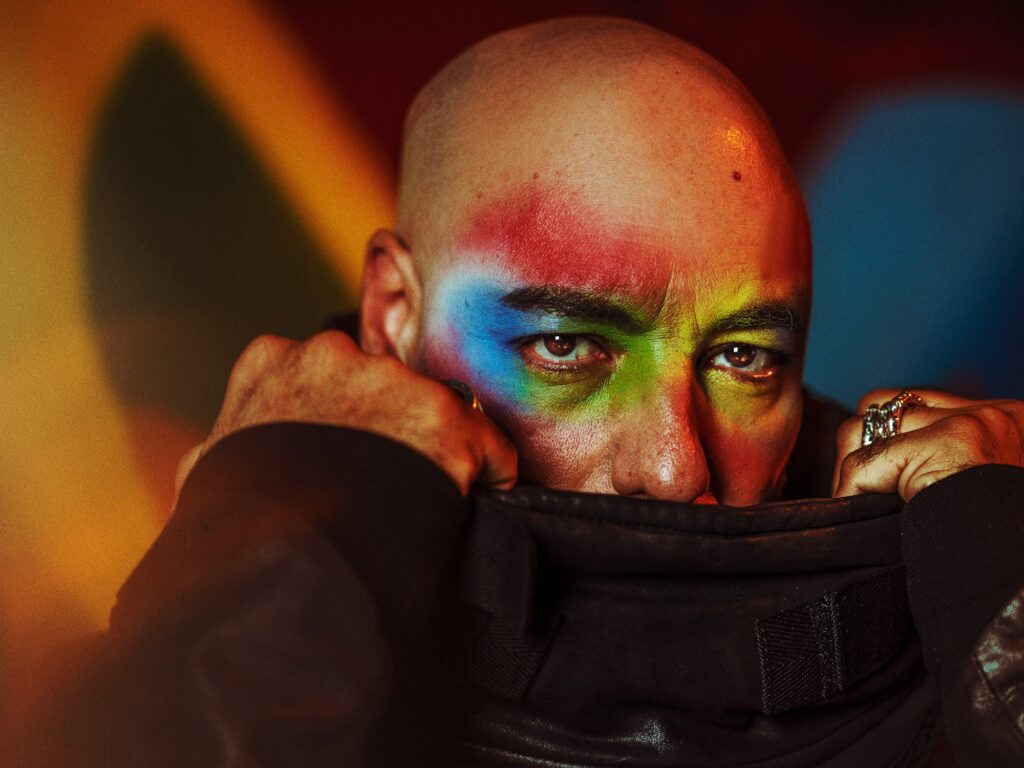
DJ LIFE: How does a track like “Grinnin’” with Fedde Le Grand fit into that color spectrum versus something deeper like “Temptation” with Low Steppa?
Sanchez: “Temptation” has a warmer and lighter sound and, to me, fits in the visible spectrum, while “Grinnin’” sounds darker – more like a basement red-light atmosphere. This fits more into the infrared spectrum of the album.
DJ LIFE: A significant portion of this album was written during your time in London’s Shoreditch area. How did the raw, industrial U.K. summer club scene shape your sonic landscape compared to your foundational New York roots?
Sanchez: There was definitely a heavy lean towards darker, bouncier basslines that I heard in London during those summers, and this led to some of my tracks like “Come My Way” and “Temptation.” The disco and Latin sounds on the album were very influenced by my New York roots.
DJ LIFE: Six years of work went into this album. Because sounds and tastes can change in the dance-music world, what was your process of keeping or updating tracks, or discarding them along the way?
Sanchez: There are a few tracks that I have revisited closer to the end of the album and updated some sounds and mixdowns. The key ideas remained, but I updated some of the synths and effects. This way, the entire album has a consistent and fresh sound.
DJ LIFE: Your collaboration list on this record crosses multiple generations and genres – from U.K. garage acts like Donae’o and Kele Le Roc to pop icon Melanie C. What’s your process when collaborating and bringing artists into your musical world?
Sanchez: I worked with artists I admire and relate to their work and, more importantly, what their voices bring to the palette of colors on this project. Their contributions really brought the ideas in my head to life and made the songs very three-dimensional and relatable.
DJ LIFE: For the true crate-diggers, you’re releasing this album as a red, transparent, triple-vinyl package. As a longtime vinyl DJ yourself, how did you approach the sequencing of the tracks specifically to cater to a working DJ spinning wax?
Sanchez: I created extended versions of many of the tracks for the vinyl and was careful about the run time to ensure maximum quality and volume to each vinyl. I wanted to be able to play them out myself, so I made sure this would sound as top-notch as possible, while cool to look at [laughs].
DJ LIFE: Lyrically, you’ve noted that the album pulls heavily from your own personal experiences over the last several years. What’s it like to release an emotionally vulnerable album these days?
Sanchez: I have always connected personally through my music – I feel the artists I most appreciate and follow do the same. It gives me a clear starting point while writing. Sometimes, however, I can imagine stories and write about jokes as well.
DJ LIFE: Looking at the singles “Come My Way” and “Temptation,” how do you feel these tracks bridge the gap between the classic ’90s/’00s house groove your longtime fans crave and the modern tech-house sonic landscape?
Sanchez: I think the vibe of each of these tracks connects to my roots and classic sound, while elements such as the drums, bass sounds and synths are more current and what I like to use now to give it the punch that’s more in line with current tracks.
DJ LIFE: Is there a track on Spectrum that was the most challenging to finish or the one that went through the most revisions?
Sanchez: “I Don’t Wanna Know” with Melanie C is the one I revised the most. Initially, I started with a sample idea, but when clearance became a bit challenging, I reworked the track several times. I really wanted to keep it a bit more underground, so the final version was the one I was happiest with. Melanie’s vocals were fantastic, so it was really on my end to get the balance right with her sound and an underground vibe.
DJ LIFE: Your summer tour is a relentless schedule that features a major “Flower Power” residency at Pacha Ibiza. What does mean to you to hold down a residency there in ’26?
Sanchez: “Flower Power,” in its current incarnation, really reaches back to a classic sound, while I have been able to update elements and remix them live. In a way, this aligns perfectly with Spectrum, as I have reached back into my classic vibes while simultaneously updating the sound to keep the original spirit of where I started, but in a modern setting. I love being back at Pacha Ibiza. It’s a bit of a homecoming for me, as this was where I held my long-running Release Yourself residency for years.
DJ LIFE: This summer you’re pulling off some massive double-header days – playing festivals, then flying straight to Ibiza for a gig the same night. What is your survival strategy?
Sanchez: I rest as much as possible before and after my sets and, for these double-ups, I stay hydrated, little to no alcohol, and just focus on the music.
DJ LIFE: You have several “Hacienda Classical” and FAC51 Hacienda dates booked this summer. There’s got to be some great memories with that legendary Manchester brand…
Sanchez: I really have a strong connection to that era and, having played the Hacienda in its heyday, remember what the vibe was like then. I try to recapture the spirit with my sets while adding the current energy with beats to make it a new experience.
DJ LIFE: The tour also features gigs in massive warehouse spaces, but also some intimate rooms. What’s your approach to each?
Sanchez: Larger rooms are more challenging to connect with an audience in the way you can with a smaller room, but the energy is more intense. I draw from that energy and reflect it back to the crowd.
DJ LIFE: Your tour hits some vastly different party cultures. Do you still read a crowd completely on the fly?
Sanchez: I still read them on the fly, but I do weave a thread with where Spectrum maps my current sound and then I merge them. It keeps each set fresh and unique.
DJ LIFE: In recent weeks, you stepped up for a highly talked-about B2B set with TCTS for KISS. Looking back at your entire career, what’s your absolute favorite B2B set you have ever played?
Sanchez: There have been quite a few special B2Bs, but The S-Men’s first tour with DJ Sneak and Junior Sanchez is a standout for me, since that was the first B2B2B I had rehearsed for and we really were in a new and up-and-coming era then. The one we did at Tribal Gathering was magic!
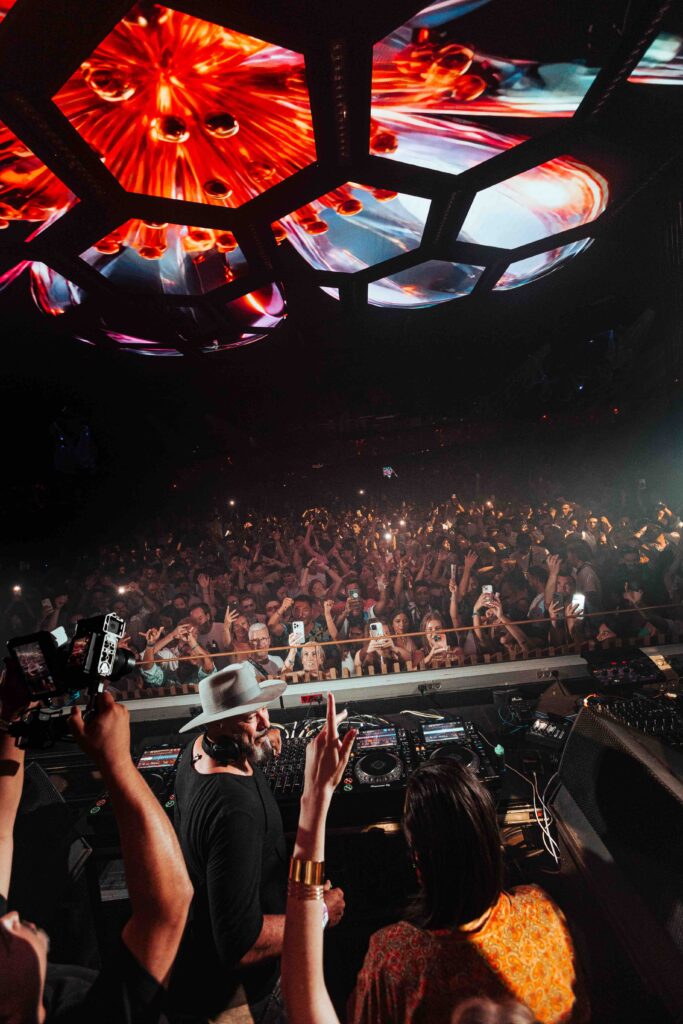
DJ LIFE: Do you have any pre-gig rituals or routines before you play in front of a big crowd?
Sanchez: I tend to meditate to clear my head and just mentally go through certain tracks I want to create highlights with. That allows me to relax and open my mind to flow.
DJ LIFE: How do you handle a crowd that is completely staring at you through their phone screens?
Sanchez: I always prefer them to put away their phones to live in the moment, but also understand this is the way people often currently experience events and try to not let it throw me off. I think more events are starting to restrict them – and hopefully that allows the crowd to be more in the moment.
DJ LIFE: How do you view the industry changes, like the necessity to play the social-media game?
Sanchez: Visibility online has become a major benchmark of success for the industry across the board. I think that when everything reaches a saturation point, those with true passion and something original to offer will cut through. I view things as they are and work out how to navigate them. My passion for what I love remains the same.
DJ LIFE: With social-media metrics and viral video clips impacting so much, how do you maintain your status as an uncompromising, pure selector?
Sanchez: I have always played and made music that resonates with me and stayed authentic. I’ve found that social media actually rewards authenticity over manufactured content, so this works out for me [laughs].
DJ LIFE: Over the course of your touring career, can you recall the most meaningful interaction you’ve had with a fan?
Sanchez: I met a couple after a set in Pacha years ago, who told me they had met when I was playing “Another Chance” at Pacha, and they fell in love. He proposed to her the following year when a DJ was playing “Another Chance” at another event. My song helped connect them in a profound way, and that affected me deeply.
DJ LIFE: If you could go back and tell the Roger Sanchez who was releasing “Another Chance” in 2001 one piece of advice, what would it be?
Sanchez: I would say… there will be awesome moments and others where things get bumpy and challenging. Keep being yourself and doing what you are doing – it’ll all work out in the end.
DJ LIFE: What is the most rewarding part of being the Stealth Records label boss and mentoring the next generation of house talent?
Sanchez: I get to open up opportunities for others and show them what I’ve learned while being part of the next generation.
DJ LIFE: Is there a bucket-list career goal you’ve yet to check off the list?
Sanchez: I have played quite a few festivals and venues, so I don’t know if there is a bucket-list venue as such… maybe a set in outer space—yes! A space rave! I’m up for that!